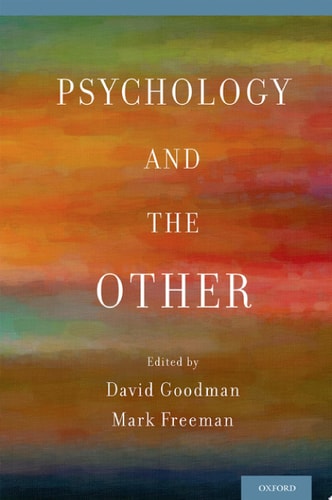
Psychology and the Other
0
0
As an Amazon Associate and affiliate partner, Menrva Books earns from qualifying purchases. Learn more
Author Description
The figure of the Other is an important though underutilized vehicle for exploring and reconceptualizing classic psychological and philosophical issues, from identity and purpose to human frailty and suffering. Moreover, it can be used to reorient inquiry toward aspects of the human condition that are often regarded as secondary or peripheral--for instance, our responsibility to others and to the environment. A broad spectrum of disciplines including psychology, philosophy, theology, and religious studies speak about the challenges we face in encountering the Other vis-à-vis our receptivity, openness, and capacity to entertain the stranger in our midst.Through constructive critical exchange, Psychology and the Other engages such perspectives on the Other from various subdisciplines within psychology and related disciplines. The volume uses the language of the Other as a vehicle for rethinking aspects of psychological processes, especially within the therapeutic context. As a group, the contributors demonstrate that the language of the Other may be more fitting than the egocentric language frequently employed in psychology. They also embrace the challenge to create new theories and practices that are more ethically attuned to the dynamic realities of psychological functioning.The book is organized into three sections. The first deals with foundational philosophical concerns and provides an introduction to the project of "thinking Otherwise." The second section brings these fundamental philosophical concerns to bear on the therapeutic situation, especially in the realm of relational psychoanalysis. The final section of the book addresses concrete psychological situations in which the Other figures prominently and where the power of thinking Otherwise is most visibly demonstrated.
Menrva's Summary
THE THESIS
This volume investigates whether the concept of the 'Other' can serve as a more effective framework for psychological inquiry than traditional, egocentric models. Editors David S. G. Goodman and Mark P. Freeman assemble a multidisciplinary group of scholars to challenge existing psychological paradigms. By integrating perspectives from philosophy, theology, and clinical practice, the authors argue that shifting focus toward our responsibility to the 'Other' allows for a more ethically attuned understanding of human suffering, identity, and relational dynamics.
THE SCOPE MAP
What You Will Find
- Foundational philosophical frameworks for 'thinking Otherwise' in psychological research.
- Applications of relational psychoanalysis within the therapeutic context.
- Case studies and analyses of concrete psychological situations involving the 'Other'.
- Critical examinations of the limitations of egocentric language in current psychological theory.
THE AUTHORITY PERSPECTIVE
Experts identify this text as a significant contribution to the intersection of continental philosophy and clinical psychology. Readers frequently note the academic density of the prose, which is intended for practitioners and scholars interested in reorienting psychological practice toward ethical relationality.
Page Count:
416
Publication Date:
2015-01-01
Publisher:
Oxford University Press
ISBN-10:
0199324824
ISBN-13:
9780199324828
Philosophy
Psychology
Ethics
Psychoanalysis
Social Science
Community Tags
Similar Books