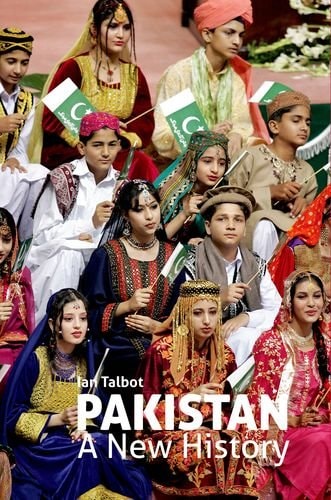
Pakistan: A New History
0
0
As an Amazon Associate and affiliate partner, Menrva Books earns from qualifying purchases. Learn more
Author Description
Product Description If Pakistan is to preserve all that is good about its country--the generosity and hospitality of its people, the dynamism of its youth--it must face the deterioration of its social and political institutions. Sidestepping easy headlines to identify Pakistan's true dangers, this volume revisits the major turning points and trends of Pakistani history over the past six decades, focusing on the increasing entrenchment of Pakistan's army in its political and economic arenas; the complex role of Islam in public life; the tensions between central and local identities and democratic impulses; and the effect of geopolitical influences on domestic policy and development. While Ian Talbot's study centres on Pakistan's many failures--the collapse of stable governance, the drop in positive political and economic development, and, most of all, the unrealised goal of securing a separate Muslim state--his book unequivocally affirms the country's potential for a positive reawakening. These failures were not preordained, Talbot argues, and such a fatalistic reading does not respect the complexity of historical events, individual actors, and the state's own rich resources. While he acknowledges grave crises still lie ahead for Pakistan, Talbot's sensitive historical approach makes it clear that favourable opportunities still remain for Pakistan, in which the state has a chance to reclaim its priorities and institutions and reestablish political and economic sustainability.
Menrva's Summary
THE THESIS
This volume investigates the structural failures of the Pakistani state and evaluates the potential for institutional reform and political sustainability. Ian Talbot, a historian specializing in South Asian studies, utilizes six decades of historical data to analyze the intersection of military influence, religious identity, and geopolitical pressures. He argues against fatalistic interpretations of the nation's history, positing that the current crises are the result of specific political choices rather than inevitable outcomes.
THE SCOPE MAP
What You Will Find
- Analysis of the military's entrenchment in political and economic sectors.
- Examination of the role of Islam in public life and governance.
- Assessment of tensions between central authority and local regional identities.
- Evaluation of the impact of international geopolitical influences on domestic policy.
THE AUTHORITY PERSPECTIVE
Experts recognize this work as a comprehensive interpretation of Pakistan's institutional development and historical trajectory. Readers frequently note the academic density of the prose, which provides a nuanced alternative to common media headlines regarding the region.
Page Count:
224
Publication Date:
2012-10-30
Publisher:
Oxford University Press
ISBN-10:
0199327718
ISBN-13:
9780199327713
History
Asian Studies
Pakistan
International relations
Community Tags
Similar Books