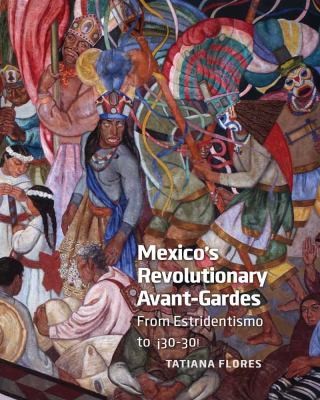
Mexico's Revolutionary Avant-Gardes: From Estridentismo to ¡30-30!
0
0
As an Amazon Associate and affiliate partner, Menrva Books earns from qualifying purchases. Learn more
Author Description
In December 1921, the poet Manuel Maples Arce (1898-1981) papered the walls of Mexico City with his manifesto Actual No. 1, sparking the movement Estridentismo (Stridentism). Inspired by Mexico's rapid modernization following the Mexican Revolution, the Estridentistas attempted to overturn the status quo in Mexican culture, taking inspiration from contemporary European movements and methods of expression. Mexico's Revolutionary Avant-Gardes provides a nuanced account of the early-20th-century moment that came to be known as the Mexican Renaissance, featuring an impressive range of artists and writers. Relying on extensive documentary research and previously unpublished archival materials, author Tatiana Flores expands the conventional history of Estridentismo by including its offshoot movement ¡30-30! and underscoring Mexico's role in the broader development of modernism worldwide. Focusing on the interrelationship between art and literature, she illuminates the complexities of post-revolutionary Mexican art at a time when it was torn between formal innovation and social relevance. A groundbreaking look at avant-garde art and literature in the wake of the Mexican Revolution, illustrating Mexico City's importance as a major center for the development of modernism
Menrva's Summary
THE THESIS
The book investigates the emergence and impact of Mexico's revolutionary avant-garde movements in the early 20th century.
Drawing on extensive archival research and previously unpublished materials, Tatiana Flores examines Estridentismo and its offshoot ¡30-30!, movements that sought to redefine Mexican culture in the wake of the Mexican Revolution. The book highlights the interrelationship between art and literature, exploring the tension between formal innovation and social relevance in post-revolutionary Mexico. It argues for Mexico City's crucial role as a center for the development of global modernism during this period.
THE SCOPE MAP
- The origins and development of the Estridentismo movement, sparked by Manuel Maples Arce's manifesto.
- An exploration of the ¡30-30! movement as an offshoot of Estridentismo.
- Analysis of the influence of contemporary European avant-garde movements on Mexican artists and writers.
- Detailed examination of the interrelationship between visual art and literature in the Mexican Renaissance.
- Discussion of the tension between formal innovation and social relevance in post-revolutionary Mexican art.
- Mexico's contribution to the broader development of modernism worldwide.
- Previously unpublished archival materials and extensive documentary research.
THE AUTHORITY PERSPECTIVE
This book is regarded as a significant contribution to the study of early 20th-century Mexican art and literature. It is praised for its in-depth research, utilizing extensive archival materials and previously unpublished documents to provide a nuanced account of the Estridentismo and ¡30-30! movements. The work is noted for expanding the conventional history of Estridentismo by incorporating its offshoot and underscoring Mexico's role in global modernism. The focus on the interplay between art and literature offers a complex view of post-revolutionary Mexican artistic expression.
Page Count:
348
Publication Date:
2013-01-01
ISBN-10:
0300184484
ISBN-13:
9780300184488
History
Non-Fiction
Art
Modernism
Avant-garde
Art History
Literary Criticism
Community Tags
Similar Books














