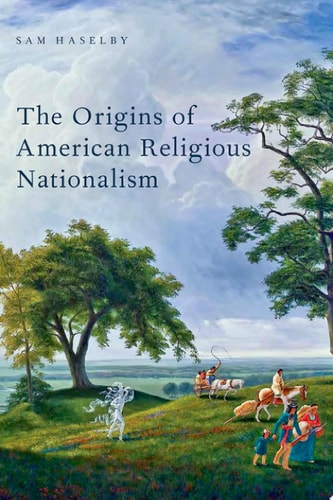
Religion in America: Origins of American Religious Nationalism
0
0
As an Amazon Associate and affiliate partner, Menrva Books earns from qualifying purchases. Learn more
Author Description
Sam Haselby Offers A New And Persuasive Account Of The Role Of Religion In The Formation Of American Nationality, Showing How A Contest Within Protestantism Reshaped American Political Culture And Led To The Creation Of An Enduring Religious Nationalism. Following U.s. Independence, The New Republic Faced Vital Challenges, Including A Vast And Unique Continental Colonization Project Undertaken Without, In The Centuries-old European Senses Of The Terms, Either A Church Or A State. Amid This Crisis, Two Distinct Protestant Movements Arose: A Popular And Rambunctious Frontier Revivalism; And A Nationalist, Corporate Missionary Movement Dominated By Northeastern Elites. The Former Heralded The Birth Of Popular American Protestantism, While The Latter Marked The Advent Of Systematic Protestant Missionary Activity In The West. The Explosive Economic And Territorial Growth In The Early American Republic, And The Complexity Of Its Political Life, Gave Both Movements Opportunities For Innovation And Influence. This Book Explores The Competition Between Them In Relation To Major Contemporary Developments-political Democratization, Large-scale Immigration And Unruly Migration, Fears Of Political Disintegration, The Rise Of American Capitalism And American Slavery, And The Need To Nationalize The Frontier. Haselby Traces These Developments From Before The American Revolution To The Rise Of Andrew Jackson. His Approach Illuminates Important Changes In American History, Including The Decline Of Religious Distinctions And The Rise Of Racial Ones, How And Why Indian Removal Happened When It Did, And With Andrew Jackson, The Appearance Of The First Full-blown Expression Of American Religious Nationalism.
Menrva's Summary
THE THESIS
This work investigates how the competition between frontier revivalism and elite missionary movements forged the foundations of American religious nationalism. Sam Haselby, a historian of American religion and politics, utilizes archival research and historical analysis to argue that the early American republic's lack of a centralized church or state necessitated a new form of national identity. He examines how Protestant factions vied for influence during the nation's expansion, ultimately shaping the political culture and racial dynamics of the United States through the era of Andrew Jackson.
THE SCOPE MAP
What You Will Find
- Analysis of the conflict between popular frontier revivalism and Northeastern missionary organizations.
- Examination of the intersection between religious development and the rise of American capitalism and slavery.
- Historical investigation into the decline of religious distinctions and the concurrent rise of racial categorization.
- Exploration of the political and social factors leading to the implementation of Indian removal policies.
THE AUTHORITY PERSPECTIVE
Scholars and historians frequently cite this text for its rigorous examination of the structural origins of American religious nationalism. Readers often note the academic density of the prose, which provides a comprehensive framework for understanding the early republic's complex political and religious landscape.
Page Count:
320
Publication Date:
2015-01-01
Publisher:
Oxford University Press, Incorporated
ISBN-10:
0199329583
ISBN-13:
9780199329588
Politics
Religion
History
Sociology
Nationalism
American History
United States
Church & State
Community Tags
Similar Books














