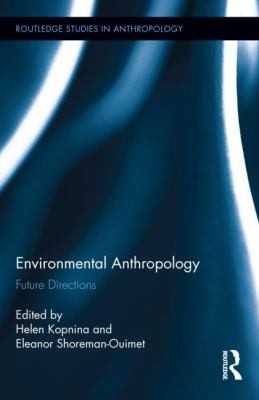
Environmental Anthropology: Future Directions
0
0
As an Amazon Associate and affiliate partner, Menrva Books earns from qualifying purchases. Learn more
Author Description
This volume presents new theoretical approaches, methodologies, subject pools, and topics in the field of environmental anthropology. Environmental anthropologists are increasingly focusing on self-reflection - not just on themselves and their impacts on environmental research, but also on the reflexive qualities of their subjects, and the extent to which these individuals are questioning their own environmental behavior. Here, contributors confront the very notion of "natural resources" in granting non-human species their subjectivity and arguing for deeper understanding of "nature," and "wilderness" beyond the label of "ecosystem services." By engaging in interdisciplinary efforts, these anthropologists present new ways for their colleagues, subjects, peers and communities to understand the causes of, and alternatives to environmental destruction. This book demonstrates that environmental anthropology has moved beyond the construction of rural, small group theory, entering into a mode of solution-based methodologies and interdisciplinary theories for understanding human-environmental interactions. It is focused on post-rural existence, health and environmental risk assessment, on the realm of alternative actions, and emphasizes the necessary steps towards preventing environmental crisis.--Publisher's description.
Menrva's Summary
THE THESIS
This volume explores novel theoretical frameworks, methodologies, and subject areas within environmental anthropology, emphasizing self-reflection and the questioning of environmental behavior. The book addresses the concept of "natural resources" by attributing subjectivity to non-human species and advocating for a more profound understanding of "nature" and "wilderness" beyond mere "ecosystem services." Contributors engage in interdisciplinary efforts to offer new perspectives on the causes of and solutions to environmental destruction, moving beyond traditional rural-centric theories to embrace solution-based approaches and interdisciplinary theories for human-environmental interactions. It focuses on post-rural existence, health and environmental risk assessment, alternative actions, and preventative measures for environmental crises.
THE SCOPE MAP
- New theoretical approaches in environmental anthropology
- Reflexive methodologies in environmental research
- Re-evaluation of "natural resources" and non-human subjectivity
- Interdisciplinary approaches to environmental destruction
- Solution-based methodologies for human-environmental interactions
- Focus on post-rural existence and health
- Environmental risk assessment
- Strategies for preventing environmental crisis
THE AUTHORITY PERSPECTIVE
This book presents a forward-looking perspective on environmental anthropology, showcasing new theoretical and methodological directions within the field. It highlights a shift towards self-reflection among environmental anthropologists and their subjects, questioning current environmental behaviors and the very definition of natural resources. The collection emphasizes interdisciplinary collaboration and solution-oriented approaches to address environmental destruction, moving beyond traditional theoretical constructs. The work aims to provide colleagues, communities, and peers with innovative frameworks for understanding and mitigating environmental crises.
Page Count:
314
Publication Date:
2013-01-01
ISBN-10:
0415517486
ISBN-13:
9780415517485
Science
Non-Fiction
Sustainability
Ecology
Anthropology
Community Tags
Similar Books