Crime and the Urban Imagination
0
0
As an Amazon Associate and affiliate partner, Menrva Books earns from qualifying purchases. Learn more
Author Description
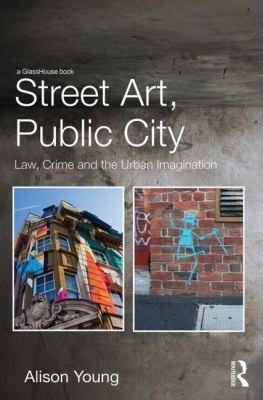
This book investigates street art and graffiti as cultural practices at the borders of legality and illegality. Cities are engaged in a continual process of cultural production through which their self-image is developed and refined; a process that is sometimes legal -- as with architecture, statuary, signage, advertising, and public art -- and sometimes not -- with practices such as billposting, graffiti and street art. Alternately (and sometimes simultaneously) considered criminal, gentrifying, or commercial, street art exists and operates on the boundaries between the legal and illegal, and between art, crime, and culture. Given its capacity to generate discussion and polarise opinion, street art is a cultural practice that can inform us about the nature of urban life and the limits of public space. Street Art, Public City: Crime and the Urban Imagination draws upon fifteen years of research to examines the ways in which street art has become as integral part of cities' cultural identities. It will be of interest to readers in the fields of street art and graffiti specifically, but also to those interested in issues relating to cities and urban space, legal geography, cultural criminology as well as cultural studies and art more generally.
Menrva's Summary
THE THESIS
This book investigates the complex relationship between urban environments and the cultural practices of street art and graffiti, examining their position at the borders of legality and illegality. Alison Young, drawing on fifteen years of research, explores how cities construct their identities through cultural production, encompassing both legal forms like architecture and illegal ones like graffiti. The book analyzes street art as a practice that simultaneously informs discussions on urban life, public space, and the nature of crime and culture. It aims to demonstrate how street art has become an integral component of cities' cultural identities, often polarizing opinion and generating significant discussion.
THE SCOPE MAP
- Analysis of street art and graffiti as cultural practices operating between legality and illegality.
- Examination of cities as sites of continual cultural production and self-image development.
- Exploration of the dual nature of street art as potentially criminal, gentrifying, or commercial.
- Discussion of street art's capacity to inform understandings of urban life and the limits of public space.
- Fifteen years of research integrated into the analysis.
- Relevance to fields including street art, urban studies, legal geography, cultural criminology, and cultural studies.
THE AUTHORITY PERSPECTIVE
The book is positioned as a significant contribution to the understanding of street art within urban contexts, appealing to specialists in the field as well as those interested in broader urban and cultural issues. Its fifteen years of research suggest a comprehensive and deeply informed perspective on the subject. The framing indicates a work that will likely provoke thought on the boundaries of public space and artistic expression. It is expected to be of interest to academics and practitioners in cultural studies, criminology, and urban planning.
Page Count:
177
Publication Date:
2013-01-01
ISBN-10:
0415538696
ISBN-13:
9780415538695
Non-Fiction
Crime
Art
History
Urban Studies
Sociology
Graffiti
Street Art
Art History
Community Tags
Similar Books














