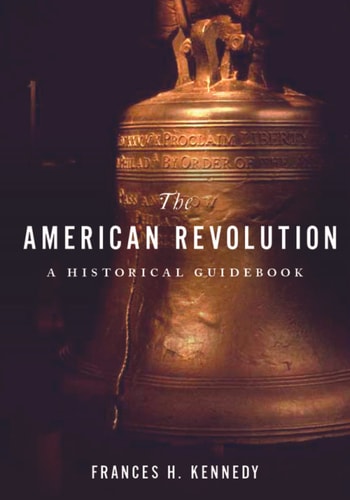
The American Revolution: A Historical Guidebook
0
0
As an Amazon Associate and affiliate partner, Menrva Books earns from qualifying purchases. Learn more
Author Description
In 1996, Congress commissioned the National Park Service to compile a list of sites and landmarks connected with the American Revolution that it deemed vital to preserve for future generations. Some of these sites are well known--Bunker Hill, Valley Forge, Fort Ticonderoga--and in no danger of being lost; others less so-- Blackstock's Plantation in South Carolina or Bryan's Station in Kentucky--and more vulnerable. But all are central to the story of our nation's fight for independence. From battlefields to encampments, meeting houses to museums, these places offer us a chance to rediscover the remarkable men and women who founded this nation and to recognize the relevance of not just what they did, but where they did it.The American Revolution: A Historical Guidebook takes readers to nearly 150 of these sites, providing an overview of the Revolution through an exploration of the places where American independence was articulated, fought for, and eventually secured. Beginning with the Boston Common, first occupied by British troops in 1768, and closing with Fraunces Tavern in New York, where George Washington bid farewell to his officers on December 4, 1783, Kennedy takes readers on a tour of the most significant places of Revolutionary history. Accompanied by illuminating excerpts and essays from some of the foremost scholars in the field, including David McCullough, Barbara Tuchman, David Hackett Fischer, Eric Foner, and John Ferling, the entries move in a roughly chronological order from the pre-Revolutionary years up through 1787. Taken together, the combination of site, essay, and excerpt provides rich context and overview, giving a sense of the major figures and events as well as the course of the Revolution, and cover topics ranging from the Boston Tea Party to the frontier wars.The guide is encyclopedic in scope and covers a wide geographical sweep. Accompanied by historical maps, as well as a number of illuminating primary documents including the Declaration.
Menrva's Summary
THE THESIS
This guidebook investigates the physical geography of the American Revolution by cataloging the essential sites and landmarks that define the nation's fight for independence. Frances H. Kennedy, working in conjunction with the National Park Service, compiles a comprehensive record of locations ranging from well-known battlefields to vulnerable historic sites. The book utilizes a chronological framework to connect these physical locations to the broader narrative of the Revolutionary era, arguing that the preservation of these spaces is vital to understanding the founding of the United States.
THE SCOPE MAP
What You Will Find
- A curated list of nearly 150 significant Revolutionary War sites and landmarks across the United States.
- Chronological organization of entries spanning from pre-Revolutionary tensions in 1768 to the conclusion of the war in 1783.
- Scholarly essays and excerpts from prominent historians including David McCullough, Barbara Tuchman, and Eric Foner.
- Historical maps and primary source documents that provide context for the events associated with each location.
THE AUTHORITY PERSPECTIVE
Experts and history enthusiasts frequently cite this volume as a foundational reference for those interested in the physical history of the American Revolution. Readers often note the accessibility of the prose, which balances scholarly rigor with the practical utility of a travel guidebook.
Page Count:
400
Publication Date:
2014-01-01
Publisher:
Oxford University Press
ISBN-10:
0199324247
ISBN-13:
9780199324248
Travel
History
American History
Reference
Military History
Historic Sites
Community Tags
Similar Books














