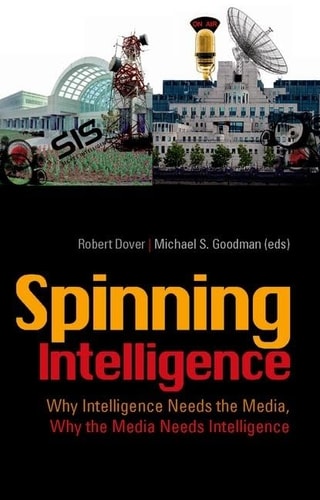
Spinning Intelligence: Why Intelligence Needs the Media, Why the Media Needs Intelligence
0
0
As an Amazon Associate and affiliate partner, Menrva Books earns from qualifying purchases. Learn more
Author Description
Throughout the twentieth century, especially during wartime and the Cold War, intelligence agents routinely used the media to publish and broadcast material that would deceive external enemies, thwart domestic subversion or simply to change the way readers thought about fascism or communism. Today stories are chanelled to journalists in order to promote a news agenda deemed favourable to MI5, MI6 or to the CIA, or to 'spin' the coverage of key issues. Investigative reporters often have a more adversarial relationship with the security services, seeing them as over-mighty agents of the state who should be subjected to forensic scrutiny of what they get up too - allegedly for the public good. The furore over 'rendition' of terrorist suspects by the CIA and the complicity of British agencies in this process is but one example of journalists uncovering practices that the intelligence community would rather have kept secret. The contributors to this book, drawn from former intelligence officers, the media and academia, explore this intriguing and often fraught contest, shedding light on many hitherto unknown aspects of the intriguing and symbiotic relationship between the 'second oldest profession' and the print and broadcast media. Speaking from the perspective of the journalist are Chapman Pincher and Gordon Corera (Security Editor, BBC), whose essays trace the evolving relationship between news media outlets and the government, especially with regards to advances in technology. Reporting from the perspective of the political institution are Sir David Omand, Nick Wilkinson, Michael Goodman, and Anthony Campbell, who explain governmental oversight of intelligence agencies, the operation of clandestine information units, and the laws that govern the control of information. Richard Aldrich investigates the exploitation of the globalized media by intelligence agencies; Scott Lucas and Steve Hewitt tackle the CIA's use of open sources for intelligence purposes; and, Wyn Bow
Menrva's Summary
THE THESIS
This book investigates the complex, symbiotic, and often adversarial relationship between intelligence agencies and the news media in the modern era. The authors, Robert Dover and Michael S. Goodman, assemble a collection of essays from former intelligence officers, journalists, and academics to analyze how information is managed, leaked, and spun. By examining historical precedents from the Cold War alongside contemporary practices, the text argues that the intersection of state security and public reporting is a critical, evolving contest for control over information.
THE SCOPE MAP
What You Will Find
- Historical analysis of intelligence-media relations during the Cold War and wartime.
- Examination of governmental oversight mechanisms and the legal frameworks governing information control.
- Case studies on the use of open-source intelligence and the exploitation of globalized media platforms.
- Perspectives from both sides of the divide, including former intelligence officials and veteran security journalists.
THE AUTHORITY PERSPECTIVE
Experts and scholars in the field of intelligence studies frequently cite this collection as a balanced resource for understanding the mechanics of state-media interaction. Readers often note the academic rigor of the contributors, which provides a comprehensive overview of how clandestine agencies influence public discourse.
Page Count:
320
Publication Date:
2009-10-22
Publisher:
Oxford University Press
ISBN-10:
0199326940
ISBN-13:
9780199326945
Politics
History
International relations
Writing Guides
Intelligence
Journalism
Writing
Media Studies
Reference
Specific Topics
Community Tags
Similar Books


Reader Comments
Share Your Thoughts
No comments yet. Be the first to share your thoughts!