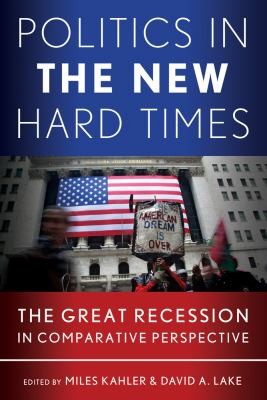
Politics in New Hard Times
0
0
As an Amazon Associate and affiliate partner, Menrva Books earns from qualifying purchases. Learn more
Author Description
The Great Recession and its aftershocks, including the Eurozone banking and debt crisis, add up to the worst global economic crisis since the Great Depression of the 1930s. Although economic explanations for the Great Recession have proliferated, the political causes and consequences of the crisis have received less systematic attention. Politics in the New Hard Times is the first book to focus on the Great Recession as a political crisis, one with both political sources and political consequences. The authors examine variation in crises over time and across countries, rather than treating these events as undifferentiated shocks. Chapters also explore how crisis has forced the redefinition and reinforcement of interests at the level of individual attitudes and in national political coalitions. Throughout, the authors stress that the Great Recession is only the latest in a long history of international economic crises with significant political effects--and that it is unlikely to be the last.
Menrva's Summary
THE THESIS
The Great Recession and its aftermath represent the most severe global economic downturn since the 1930s, yet the political dimensions of this crisis have been largely overlooked. This book addresses that gap by examining the Great Recession as a political crisis, exploring its political origins and its far-reaching consequences. The authors analyze how the crisis has varied across different countries and over time, moving beyond a view of undifferentiated economic shocks. Furthermore, the text investigates how the crisis has reshaped individual interests and national political coalitions, emphasizing that this is one in a series of significant international economic crises with political ramifications.
THE SCOPE MAP
- Analysis of the political causes and consequences of the Great Recession.
- Examination of crisis variation across different countries and over time.
- Exploration of how crises redefine and reinforce interests at individual and coalition levels.
- Historical context of international economic crises and their political effects.
- Focus on the political dimensions rather than solely economic explanations.
THE AUTHORITY PERSPECTIVE
The book is recognized as the first to systematically address the political causes and consequences of the Great Recession, filling a notable gap in the literature. It is praised for its comparative approach, examining variations in crises across countries and over time rather than treating them as monolithic events. The analysis extends to how these crises reshape individual attitudes and national political coalitions. The work situates the Great Recession within a broader historical pattern of international economic crises that have significant political effects.
Page Count:
316
Publication Date:
2013-01-01
ISBN-10:
0801478278
ISBN-13:
9780801478277
Politics
History
Economics
Non-Fiction
Community Tags
Similar Books














