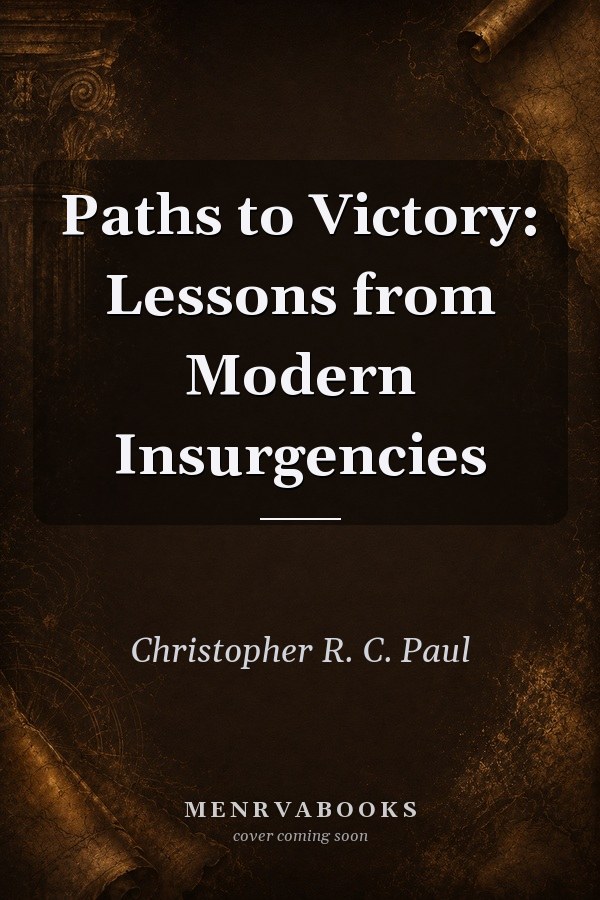
Paths to Victory: Lessons from Modern Insurgencies
0
0
As an Amazon Associate and affiliate partner, Menrva Books earns from qualifying purchases. Learn more
Author Description
When a country is threatened by an insurgency, what efforts give its government the best chance of prevailing? Contemporary discourse on this subject is voluminous and often contentious. Advice for the counterinsurgent is often based on little more than common sense, a general understanding of history, or a handful of detailed examples, instead of a solid, systematically collected body of historical evidence. A 2010 RAND study challenged this trend with rigorous analyses of all 30 insurgencies that started and ended between 1978 and 2008. This update to that original study expanded the data set, adding 41 new cases and comparing all 71 insurgencies begun and completed worldwide since World War II. With many more cases to compare, the study was able to more rigorously test the previous findings and address critical questions that the earlier study could not. For example, it could examine the approaches that led counterinsurgency forces to prevail when an external actor was involved in the conflict. It was also able to address questions about timing and duration, such as which factors affect the duration of insurgencies and the durability of the resulting peace, as well as how long historical counterinsurgency forces had to engage in effective practices before they won.
Menrva's Summary
THE THESIS
This book investigates the most effective strategies for governments to defeat insurgencies. The author, Christopher R. C. Paul, builds upon a 2010 RAND study by expanding the dataset to include 71 insurgencies that began and concluded worldwide since World War II. This expanded analysis allows for a more rigorous testing of previous findings and the exploration of critical questions previously unaddressed. The study examines approaches that led to counterinsurgency success, particularly when external actors were involved, and investigates factors influencing the duration of insurgencies and the durability of resulting peace.
THE SCOPE MAP
- Analysis of 71 insurgencies that began and ended worldwide since World War II.
- Comparison of strategies employed by governments to prevail against insurgencies.
- Examination of the role and impact of external actors in counterinsurgency conflicts.
- Investigation into factors affecting the duration of insurgencies and the sustainability of peace.
- Rigorous testing of findings from the original 2010 RAND study with an expanded dataset.
THE AUTHORITY PERSPECTIVE
This book is a significant update to a previous RAND study, expanding the case base to 71 insurgencies since World War II. The expanded data allows for more rigorous analysis and the exploration of complex questions regarding counterinsurgency effectiveness, the influence of external actors, and the long-term outcomes of conflict resolution. The work aims to provide a more evidence-based approach to counterinsurgency strategy, moving beyond anecdotal advice or common sense. Its comprehensive scope and analytical depth position it as a valuable resource for understanding modern insurgencies.
Page Count:
286
Publication Date:
2013-01-01
ISBN-10:
0833080547
ISBN-13:
9780833080547
Non-Fiction
History
Politics
Military History
Community Tags
Similar Books