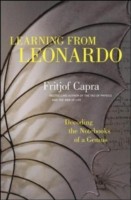
Learning from Leonardo: Decoding the Notebooks of a Genius
0
0
As an Amazon Associate and affiliate partner, Menrva Books earns from qualifying purchases. Learn more
Author Description
Leonardo da Vinci was a brilliant artist, scientist, engineer, mathematician, architect, inventor, writer, and even musician--the archetypal Renaissance man. But he was also, Fritjof Capra argues, a profoundly modern man. Not only did Leonardo invent the empirical scientific method over a century before Galileo and Francis Bacon, but Capra's decade-long study of Leonardo's fabled notebooks reveal him as a systems thinker centuries before the term was coined. He believed the key to truly understanding the world was in perceiving the connections between phenomena and the larger patterns formed by those relationships. This is precisely the kind of holistic approach the complex problems we face today demand. Capra describes seven defining characteristics of Leonardo da Vinci's genius and includes a list of over forty discoveries Leonardo made that weren't rediscovered until centuries later. Leonardo pioneered entire fields--fluid dynamics, theoretical botany, aerodynamics, embryology. Capra's overview of Leonardo's thought follows the organizational scheme Leonardo himself intended to use if he ever published his notebooks. So in a sense, this is Leonardo's science as he himself would have presented it. Leonardo da Vinci saw the world as a dynamic, integrated whole, so he always applied concepts from one area to illuminate problems in another. For example, his studies of the movement of water informed his ideas about how landscapes are shaped, how sap rises in plants, how air moves over a bird's wing, and how blood flows in the human body. His observations of nature enhanced his art, his drawings were integral to his scientific studies, and he brought art and science together in his extraordinarily beautiful and elegant mechanical and architectural designs. Obviously, we can't all be geniuses on the scale of Leonardo da Vinci. But by exploring the mind of the preeminent Renaissance genius, we can gain profound insights into how best to address the challenges of the 2
Menrva's Summary
THE THESIS
Fritjof Capra argues that Leonardo da Vinci, the archetypal Renaissance man, was also a profoundly modern thinker who pioneered the empirical scientific method and systems thinking. Capra's decade-long study of Leonardo's notebooks reveals a genius who perceived the interconnectedness of phenomena and the larger patterns they formed, a holistic approach essential for addressing contemporary complex problems. The book presents Leonardo's science as he might have intended to publish it, following his own organizational scheme. It highlights how Leonardo applied concepts across disciplines, from fluid dynamics informing his understanding of plant sap and bird flight to his integration of art and science in his designs.
THE SCOPE MAP
- Seven defining characteristics of Leonardo da Vinci's genius.
- A list of over forty discoveries made by Leonardo that were not rediscovered for centuries.
- Exploration of Leonardo's pioneering work in fields such as fluid dynamics, theoretical botany, aerodynamics, and embryology.
- An overview of Leonardo's thought organized according to his intended publication scheme.
- Examples of Leonardo's interdisciplinary approach, connecting studies of water to landscape, plant life, and human anatomy.
- Analysis of how Leonardo's observations of nature enhanced his art and his drawings informed his scientific studies.
THE AUTHORITY PERSPECTIVE
Fritjof Capra's analysis of Leonardo da Vinci's notebooks positions the artist-scientist as a precursor to modern empirical and systems thinking. The book is structured to present Leonardo's scientific ideas as he might have organized them himself, emphasizing his holistic and interconnected approach to understanding the world. Capra highlights Leonardo's prescient discoveries and his ability to draw parallels across diverse fields, from art to engineering to biology. The work suggests that Leonardo's methods offer valuable insights for tackling today's complex challenges.
Page Count:
380
Publication Date:
2013-01-01
ISBN-10:
1609949897
ISBN-13:
9781609949891
Non-Fiction
History
Biography
Science
Art History
Community Tags
Similar Books