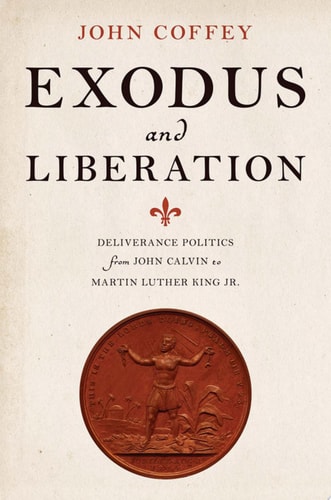
Exodus and Liberation: Deliverance Politics from John Calvin to Martin Luther King Jr.
0
0
As an Amazon Associate and affiliate partner, Menrva Books earns from qualifying purchases. Learn more
Author Description
Biblical texts have been one of the most potent sources in the Western political imagination. Presenting a new account of how the Bible's liberationist texts were deployed and disputed at critical junctures in British and American history from the Reformation to the Civil Rights Movement, Exodus and Liberation argues that the Exodus story carried one of the big ideas in Anglophone political culture - the idea of deliverance. In the sixteenth century, Calvinist rebels and reformers identified with Old Testament Israel as they sought liberation from "popish bondage." The Puritan Revolution of 1640-60 was depicted as England's Exodus, provoking a fierce contest for control of the biblical story. In the Glorious Revolution and the American Revolution, Protestants turned the Exodus narrative and deliverance language against "political slavery." Revolutionary rhetoric exposed the contradiction between libertarian ideology and black chattel slavery. Abolitionists forged a theology of liberation, articulated in resonant biblical mottoes: "Let my People Go!", "Proclaim Liberty throughout the Land," "Break every Yoke", "Release the Oppressed." African Americans cast themselves as the Children of Israel, forging a distinct identity and throwing into question the scriptural construction of the United States. Black migrations to the North were imagined as journeys to the Promised Land, and black Exodus politics climaxed in the speeches of Martin Luther King Jr. Among American statesmen, foreign policy rhetoric continued to yoke Providence to Liberation. By the twenty-first century, both George W. Bush and Barack Obama laid claim to the Exodus story. Using sermons, speeches, pamphlets, song, verse, and iconography, Exodus and Liberation documents the extraordinary reach of these biblical traditions, demonstrating how the political reading of scriptural texts powerfully informed Protestant debates over slavery and liberty.
Menrva's Summary
THE THESIS
This work investigates how the biblical narrative of the Exodus functioned as a central, contested framework for political liberation and identity formation in British and American history. John Coffey, a scholar of early modern history, examines the deployment of these scriptural texts from the Reformation through the Civil Rights Movement. By analyzing a diverse array of primary sources, he argues that the concept of deliverance provided a potent, albeit frequently contradictory, vocabulary for debates regarding tyranny, slavery, and national identity.
THE SCOPE MAP
What You Will Find
- Historical analysis of the Exodus narrative from the sixteenth-century Reformation through the twenty-first century.
- Examination of political rhetoric in the Puritan Revolution, the American Revolution, and the Civil Rights Movement.
- Use of primary source materials including sermons, political pamphlets, songs, poetry, and visual iconography.
- Exploration of the tension between libertarian political ideology and the reality of chattel slavery.
THE AUTHORITY PERSPECTIVE
Scholars and historians recognize this text as a comprehensive examination of the intersection between biblical interpretation and political culture. Readers frequently note the meticulous archival research and the clarity with which the author traces the evolution of the deliverance motif across centuries.
Page Count:
315
Publication Date:
2013-01-01
Publisher:
Oxford University Press
ISBN-10:
0199334242
ISBN-13:
9780199334247
History
Religion
American History
Exodus The
British History
Liberty
Modern History
Theology
Community Tags
Similar Books