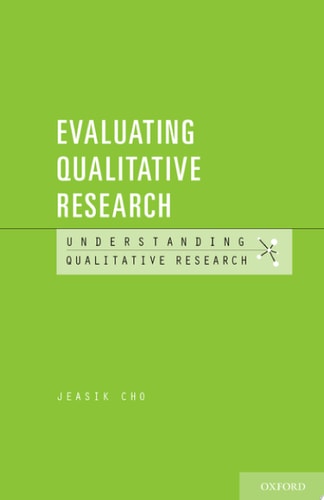
Evaluating Qualitative Research
0
0
As an Amazon Associate and affiliate partner, Menrva Books earns from qualifying purchases. Learn more
Author Description
Qualitative Researchers Read Journal Articles, Serve On Masters' And Doctoral Committees, Make Careful Decisions On Whether Conference Proposals, Manuscripts, Or Large-scale Grant Applications Should Be Accepted Or Rejected; Yet, Best Practices On How To Do This Work Thoroughly And Efficiently Have Gained Little Attention Over The Last Few Decades. Evaluating Qualitative Research Provides Expert Insight And Advice On How To Evaluate The Merit Of Qualitative Research In The Academic Community. As One Of The First Works Of Literature To Address This Gap In The Exploration Of Theory, Practice, And Reflection That Comes With The Evaluation Of Qualitative Research, Author Jeasik Cho Constructs A Typology Of Evaluation By Examining Actual Information Collected From A Variety Of Websites And Relevant Journals. By Analyzing A Host Of Journals' Established Review Guidelines And Assessment Apparatuses, Cho Presents Readers With The Core Criteria That Stands Out Amongst These Tools. As A Result, Readers Will Be Able To Confidently Agree Upon The Standards For How To Best Evaluate Qualitative Research Not Only For Their Work But For The Community At Large.
Menrva's Summary
THE THESIS
This book investigates the lack of standardized best practices for evaluating qualitative research within the academic community. Author Jeasik Cho, an expert in educational research methodology, addresses the gap in literature regarding how scholars assess conference proposals, manuscripts, and grant applications. By synthesizing data from established journal review guidelines and assessment tools, Cho constructs a comprehensive typology of evaluation criteria. The work aims to provide a reliable framework for researchers to apply when judging the merit and rigor of qualitative studies.
THE SCOPE MAP
What You Will Find
- A typology of evaluation criteria derived from diverse academic sources.
- Comparative analysis of established review guidelines from various journals.
- Methodological frameworks for assessing the quality of qualitative manuscripts and grant proposals.
- Practical guidance for serving on academic committees and peer review boards.
THE AUTHORITY PERSPECTIVE
Experts identify this work as a foundational resource for filling a significant void in methodological literature. Readers frequently note that the text provides a necessary, structured approach for academics tasked with the complex responsibility of peer review.
Page Count:
144
Publication Date:
2017-01-01
Publisher:
Oxford University Press
ISBN-10:
0199330026
ISBN-13:
9780199330027
Academic writing
Social Science
Qualitative Research
Education
Community Tags
Similar Books