Appomattox: Victory, Defeat, and Freedom at the End of the Civil War
0
0
As an Amazon Associate and affiliate partner, Menrva Books earns from qualifying purchases. Learn more
Author Description
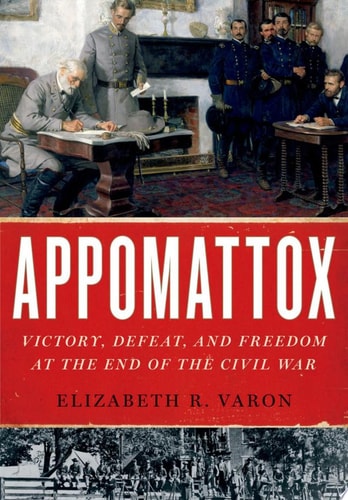
Winner, Library of Virginia Literary Award for NonfictionWinner, Eugene Feit Award in Civil War Studies, New York Military Affairs SymposiumWinner of the Dan and Marilyn Laney Prize of the Austin Civil War Round TableFinalist, Jefferson Davis Award of the Museum of the ConfederacyBest Books of 2014, Civil War Monitor6 Civil War Books to Read Now, Diane Rehm Show, NPRLee's surrender to Grant at Appomattox Court House evokes a highly gratifying image in the popular mind -- it was, many believe, a moment that transcended politics, a moment of healing, a moment of patriotism untainted by ideology. But as Elizabeth Varon reveals in this vividly narrated history, this rosy image conceals a seething debate over precisely what the surrender meant and what kind of nation would emerge from war. The combatants in that debate included the iconic Lee and Grant, but they also included a cast of characters previously overlooked, who brought their own understanding of the war's causes, consequences, and meaning. In Appomattox, Varon deftly captures the events swirling around that well remembered-but not well understood-moment when the Civil War ended. She expertly depicts the final battles in Virginia, when Grant's troops surrounded Lee's half-starved army, the meeting of the generals at the McLean House, and the shocked reaction as news of the surrender spread like an electric charge throughout the nation. But as Varon shows, the ink had hardly dried before both sides launched a bitter debate over the meaning of the war and the nation's future. For Grant, and for most in the North, the Union victory was one of right over wrong, a vindication of free society; for many African Americans, the surrender marked the dawn of freedom itself. Lee, in contrast, believed that the Union victory was one of might over right: the vast impersonal Northern war machine had worn down a valorous and unbowed South. Lee was committed to peace, but committed, too, to the restoration of the South's polit
Menrva's Summary
THE THESIS
This work investigates the immediate aftermath of the surrender at Appomattox Court House to determine how competing interpretations of the event shaped the reconstruction of the American nation. Elizabeth R. Varon, a professor of history, utilizes primary source documents, personal correspondence, and contemporary accounts to challenge the popular perception of the surrender as a purely harmonious moment of national reconciliation. She argues that the event served as a catalyst for a fierce ideological struggle between Northern and Southern perspectives regarding the nature of the Union, the legitimacy of the war, and the definition of freedom.
THE SCOPE MAP
What You Will Find
- Detailed analysis of the final military maneuvers in Virginia leading to the surrender at the McLean House.
- Examination of the conflicting narratives held by Robert E. Lee and Ulysses S. Grant regarding the war's outcome.
- Exploration of the diverse viewpoints held by African Americans, Northern civilians, and Southern veterans.
- Assessment of how the surrender influenced the political trajectory of the post-war United States.
THE AUTHORITY PERSPECTIVE
Historians and critics recognize this work for its ability to dismantle long-standing myths surrounding the end of the Civil War. Readers frequently note the academic rigor of the research while appreciating the clarity of the prose, making it a significant contribution to the study of American political memory.
Page Count:
315
Publication Date:
2013-01-01
Publisher:
Oxford University Press
ISBN-10:
0199347921
ISBN-13:
9780199347926
History
Political History
American History
Civil War
Military History
Community Tags
Similar Books