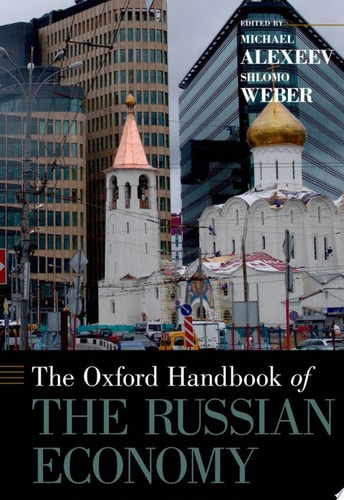
The Oxford Handbook of the Russian Economy
0
0
As an Amazon Associate and affiliate partner, Menrva Books earns from qualifying purchases. Learn more
Author Description
By 1999, Russia's Economy Was Growing At Almost 7% Per Year, And By 2008 Reached 11th Place In The World Gdp Rankings. Russia Is Now The World's Second Largest Producer And Exporter Of Oil, The Largest Producer And Exporter Of Natural Gas, And As A Result Has The Third Largest Stock Of Foreign Exchange Reserves In The World, Behind Only China And Japan. But While This Impressive Economic Growth Has Raised The Average Standard Of Living And Put A Number Of Wealthy Russians On The Forbes Billionaires List, It Has Failed To Solve The Country's Deep Economic And Social Problems Inherited From The Soviet Times. Russia Continues To Suffer From A Distorted Economic Structure, With Its Low Labor Productivity, Heavy Reliance On Natural Resource Extraction, Low Life Expectancy, High Income Inequality, And Weak Institutions. While A Voluminous Amount Of Literature Has Studied Various Individual Aspects Of The Russian Economy, In The West There Has Been No Comprehensive And Systematic Analysis Of The Socialist Legacies, The Current State, And Future Prospects Of The Russian Economy Gathered In One Book. The Oxford Handbook Of The Russian Economy Fills This Gap By Offering A Broad Range Of Topics Written By The Best Western And Russian Scholars Of The Russian Economy. While The Book's Focus Is The Current State Of The Russian Economy, The First Part Of The Book Also Addresses The Legacy Of The Soviet Command Economy And Offers An Analysis Of Institutional Aspects Of Russia's Economic Development Over The Last Decade. The Second Part Covers The Most Important Sectors Of The Economy. The Third Part Examines The Economic Challenges Created By The Gigantic Magnitude Of Regional, Geographic, Ethnic, Religious And Linguistic Diversity Of Russia. The Fourth Part Covers Various Social Issues, Including Health, Education, And Demographic Challenges. It Will Also Examine Broad Policy Challenges, Including The Tax System, Rule Of Law, As Well As Corruption And The Underground Economy.
Menrva's Summary
THE THESIS
This volume investigates the structural, institutional, and social complexities of the Russian economy to determine why rapid growth has failed to resolve deep-seated systemic issues. Editors Michael Alexeev and Shlomo Weber curate a collection of contributions from leading Western and Russian scholars, utilizing a multi-disciplinary approach to analyze the transition from the Soviet command system to a modern market-oriented state. The text provides a systematic framework for understanding how historical legacies, natural resource dependence, and institutional weaknesses continue to shape Russia's economic trajectory.
THE SCOPE MAP
What You Will Find
- Analysis of the Soviet command economy legacy and its impact on contemporary institutional development.
- Sector-specific examinations of Russia's primary industries, including energy and resource extraction.
- Investigation into the challenges posed by Russia's vast regional, ethnic, and linguistic diversity.
- Evaluation of social policy issues such as demographics, public health, education, and the rule of law.
THE AUTHORITY PERSPECTIVE
Experts identify this handbook as a foundational reference for understanding the complexities of the post-Soviet economic landscape. Readers frequently note the academic density of the prose, which serves as a comprehensive resource for researchers and policy analysts alike.
Page Count:
864
Publication Date:
2013-01-01
Publisher:
Oxford University Press
ISBN-10:
0199344132
ISBN-13:
9780199344130
Economics
History
Russia
Social Science
Community Tags
Similar Books