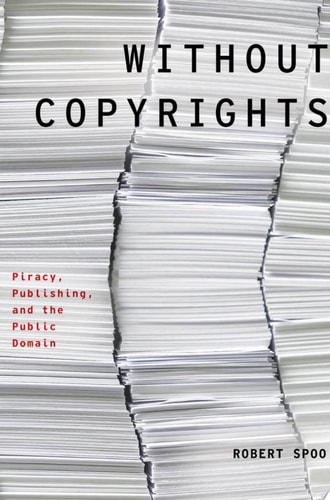
Without Copyrights: Piracy, Publishing, and the Public Domain
0
0
As an Amazon Associate and affiliate partner, Menrva Books earns from qualifying purchases. Learn more
Author Description
The names of James Joyce and Ezra Pound ring out in the annals of literary modernism, but few recognize the name of Samuel Roth. A brash, business-savvy entrepreneur, Roth made a name--and a profit--for himself as the founding editor and owner of magazines that published selections from foreign writings--especially the risqué parts--without permission. When he reprinted segments of James Joyce's epochal novel Ulysses, the author took him to court.Without Copyrights tells the story of how the clashes between authors, publishers, and literary "pirates" influenced both American copyright law and literature itself. From its inception in 1790, American copyright law offered no or less-than-perfect protection for works published abroad--to the fury of Charles Dickens, among others, who sometimes received no money from vast sales in the United States. American publishers avoided ruinous competition with each other through "courtesy of the trade," a code of etiquette that gave informal, exclusive rights to the first house to announce plans to issue an uncopyrighted foreign work. The climate of trade courtesy, lawful piracy, and the burdensome rules of American copyright law profoundly affected transatlantic writers in the twentieth century. Drawing on previously unknown legal archives, Robert Spoo recounts efforts by James Joyce, Ezra Pound, Bennett Cerf--the founder of Random House--and others to crush piracy, reform U.S. copyright law, and define the public domain. Featuring a colorful cast of characters made up of frustrated authors, anxious publishers, and willful pirates, Spoo provides an engaging history of the American public domain, a commons shaped by custom as much as by law, and of piracy's complex role in the culture of creativity.
Menrva's Summary
THE THESIS
How did the intersection of American copyright law, transatlantic literary piracy, and the actions of early twentieth-century publishers shape the modern definition of the public domain? Robert Spoo, a legal scholar and expert on modernist literature, utilizes previously unexamined legal archives to reconstruct the contentious relationships between authors like James Joyce and Ezra Pound and the publishers who exploited the lack of international copyright protections. The book argues that the American public domain was not merely a legal construct but a space defined by the tension between commercial opportunism and the evolving rights of creators.
THE SCOPE MAP
What You Will Find
- An analysis of the 1790 American copyright framework and its failure to protect foreign works.
- A detailed account of the 'courtesy of the trade' system used by publishers to manage competition.
- Case studies involving Samuel Roth, James Joyce, and Bennett Cerf regarding unauthorized publication.
- An exploration of how piracy influenced the development of modernist literature and transatlantic cultural exchange.
THE AUTHORITY PERSPECTIVE
Scholars and legal historians recognize this work as a significant contribution to the study of intellectual property and literary history. Readers frequently note the meticulous use of archival evidence to clarify the complex legal landscape that defined the modernist era.
Page Count:
374
Publication Date:
2013-01-01
Publisher:
Oxford University Press
ISBN-10:
0199344272
ISBN-13:
9780199344277
Non-Fiction
History
American History
English & College Success
Law
English
Professional Career & Trade
Literary Criticism
Copyright international
Publishing
Copyright
Law and literature
Community Tags
Similar Books