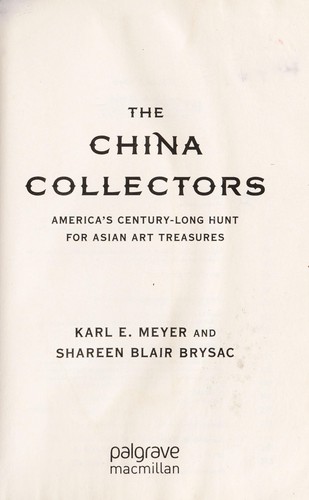
The China Collectors
0
0
As an Amazon Associate and affiliate partner, Menrva Books earns from qualifying purchases. Learn more
Author Description
Thanks to Salem sea captains, Gilded Age millionaires, curators on horseback and missionaries gone native, North American museums now possess the greatest collections of Chinese art outside of East Asia itself. How did it happen? "The China Collectors" is the first full account of a century-long treasure hunt in China from the Opium Wars and the Boxer Rebellion to Mao Zedong's 1949 ascent. The principal gatherers are mostly little known and defy invention. They included "foreign devils" who braved desert sandstorms, bandits and local warlords in acquiring significant works. Adventurous curators like Langdon Warner, a forebear of Indiana Jones, argued that the caves of Dunhuang were already threatened by vandals, thereby justifying the removal of frescoes and sculptures. Other Americans include George Kates, an alumnus of Harvard, Oxford and Hollywood, who fell in love with Ming furniture. The Chinese were divided between dealers who profited from the artworks' removal, and scholars who sought to protect their country's patrimony. Duanfang, the greatest Chinese collector of his era, was beheaded in a coup and his splendid bronzes now adorn major museums. Others in this rich tapestry include Charles Lang Freer, an enlightened Detroit entrepreneur, two generations of Rockefellers, and Avery Brundage, the imperious Olympian, and Arthur Sackler, the grand acquisitor. No less important are two museum directors, Cleveland's Sherman Lee and Kansas City's Laurence Sickman, who challenged the East Coast's hegemony. Shareen Blair Brysac and Karl E. Meyer even-handedly consider whether ancien
Menrva's Summary
THE THESIS
The China Collectors chronicles the complex and often ethically fraught history of how North American museums amassed vast collections of Chinese art.
THE SCOPE MAP
- A century-long account of art acquisition in China, spanning from the Opium Wars to Mao Zedong's rise.
- Profiles of key figures, including Salem sea captains, Gilded Age millionaires, missionaries, and museum curators.
- Exploration of the motivations and methods of both foreign collectors and Chinese dealers and scholars.
- Discussion of controversial acquisitions, such as the removal of frescoes from Dunhuang.
- Examination of the roles played by prominent collectors like Charles Lang Freer, the Rockefellers, Avery Brundage, and Arthur Sackler.
- Highlights the contributions of museum directors who challenged East Coast dominance in the art world.
- Considers the ethical dimensions of collecting and the preservation of cultural patrimony.
THE AUTHORITY PERSPECTIVE
The book is recognized for its comprehensive account of the historical acquisition of Chinese art by North American institutions. It delves into the motivations and methods of various collectors, from opportunistic foreigners to Chinese participants, and addresses the ethical complexities involved. The narrative covers a significant period, from the mid-19th century through the mid-20th century, detailing the roles of key individuals and institutions. The work is noted for its even-handed consideration of whether these acquisitions constituted preservation or plunder.
Page Count:
420
Publication Date:
2015-01-01
ISBN-10:
1137279761
ISBN-13:
9781137279767
Non-Fiction
Art
History
Collecting
Asian Studies
Art History
Community Tags
Similar Books