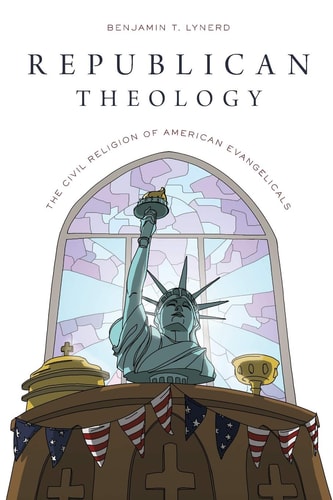
Republican Theology: The Civil Religion of American Evangelicals
0
0
As an Amazon Associate and affiliate partner, Menrva Books earns from qualifying purchases. Learn more
Author Description
White evangelicals occupy strange property on the ideological map in America, exhibiting a pronounced commitment to the principle of limited government, and yet making a significant exception for issues relating to personal morality - an exception many observers take to be paradoxical at best. Explanations of this phenomenon usually point to the knotty political alliance evangelicals built with free-market types in the late twentieth century, but sermonic evidence suggests a deeper and longer intellectual thread, one that has pervaded evangelical thought all the way back to the American founding.In Republican Theology, Benjamin Lynerd offers an historical and theological account of the hybrid position evangelicals have long affected to hold in American culture - as champions of individual liberty and as guardians of American morality. Lynerd documents the development of a resilient, if problematic, tradition in American political thought, one that sees a free republic, a virtuous people, and an assertive Christianity as mutually dependent. Situating the recent rise of the "New Right" within this larger framework, Republican Theology traces the contentious political journey of evangelicals from its earliest moments, laying bare the conceptual tensions built into their civil religion.
Menrva's Summary
THE THESIS
This book investigates the historical and theological origins of the seemingly paradoxical political alignment of American evangelicals, who advocate for limited government while simultaneously demanding state intervention in matters of personal morality. Benjamin T. Lynerd, a scholar of political science, challenges the common assumption that this hybrid ideology is a recent invention of the late twentieth-century "New Right." Instead, he argues that this political framework is rooted in a long-standing tradition of American civil religion that views a free republic, a virtuous citizenry, and an assertive Christianity as inherently interdependent components of national identity.
THE SCOPE MAP
What You Will Find
- A historical analysis of evangelical political thought from the American founding to the present day.
- An examination of the conceptual tensions between individual liberty and moral regulation within evangelical theology.
- A study of sermonic evidence and primary source texts to trace the evolution of evangelical political rhetoric.
- A contextualization of the modern "New Right" movement within a broader, multi-century intellectual tradition.
THE AUTHORITY PERSPECTIVE
Experts and political historians recognize this work as a significant contribution to the study of American civil religion and the intellectual history of the evangelical movement. Readers frequently note the academic rigor of the text, which provides a necessary depth for understanding the long-term development of contemporary political alliances.
Page Count:
260
Publication Date:
2014-09-01
Publisher:
Oxford University Press
ISBN-10:
0199363560
ISBN-13:
9780199363568
History
Politics
Religion
Sociology
Theology
Conservatism
United States
Liberty
American History
Community Tags
Similar Books