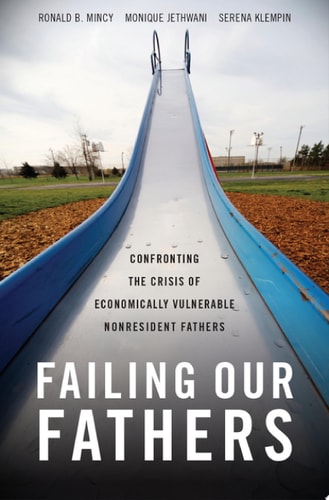
Failing Our Fathers: Confronting the Crisis of Economically Vulnerable Nonresident Fathers
0
0
As an Amazon Associate and affiliate partner, Menrva Books earns from qualifying purchases. Learn more
Author Description
Maligned as "deadbeat dads" or sexually and financially irresponsible inner-city fathers and overlooked in discussions of poverty and family policy, economically vulnerable nonresident fathers are a greatly misunderstood population.Failing Our Fathers summarizes the most recent quantitative and qualitative research, and undertakes new analyses to fill in important gaps, to produce a comprehensive picture of who these fathers are, what types of relationships they have with their families and children, and the challenges they face meeting what their loved ones and taxpayers expect from them. The great majority of these men see their children on a regular basis, despite the financial, legal, and extra-legal barriers they face. Besides requiring fathers to support their children, we must enable them to do so by supplementing their earnings and supporting their co-parenting, in ways that parallel how we require and enable vulnerable single mothers to support their children. The book lays out specific reforms required to achieve this goal as well as tips for those resources for economically vulnerable nonresident fathers.
Menrva's Summary
THE THESIS
This book investigates the systemic failures and societal misconceptions surrounding economically vulnerable nonresident fathers to propose a more equitable framework for family policy. The authors, drawing on their expertise in social policy and economics, synthesize extensive quantitative and qualitative data to challenge the prevailing "deadbeat dad" narrative. By analyzing the barriers these men face, the authors argue that current policies must shift from purely punitive measures to supportive structures that enable fathers to contribute financially and emotionally to their children's lives.
THE SCOPE MAP
What You Will Find
- Comprehensive analysis of the socioeconomic status and family dynamics of nonresident fathers.
- Examination of financial, legal, and extra-legal barriers to paternal involvement.
- Comparative policy frameworks that parallel support systems for single mothers.
- Proposed legislative and institutional reforms to improve paternal economic stability.
THE AUTHORITY PERSPECTIVE
Experts and policymakers recognize this work as a critical intervention in the discourse on poverty and family welfare. The text is frequently cited for its rigorous data-driven approach and its ability to bridge the gap between academic research and actionable policy reform.
Page Count:
208
Publication Date:
2015-01-05
Publisher:
Oxford University Press
ISBN-10:
0199371148
ISBN-13:
9780199371143
Economics
Introduction to Social WorkWelfare
Father and child
Fatherhood
Social Issues
Sociology
Family Studies
Public Policy
Community Tags
Similar Books