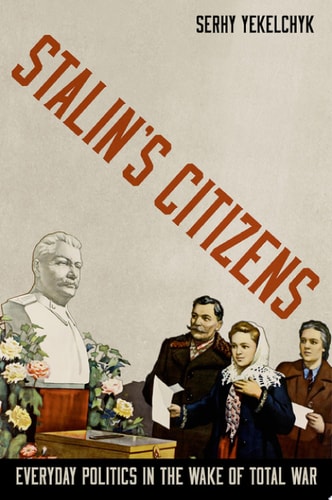
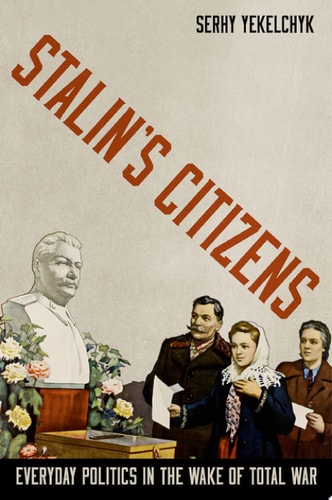
Stalin's Citizens
0
0
As an Amazon Associate and affiliate partner, Menrva Books earns from qualifying purchases. Learn more
Author Description
Being A Good Citizen Under Stalin Meant Taking An Active Part In Political Rituals, Such As Elections, Parades, Festive Meetings, Political Information Sessions, And Subscriptions To State Bonds. In Stalin's Citizens, Serhy Yekelchyk Examines How Ordinary Citizens Came To Embrace Some Parts Of This Everyday Stalinist Politics And Resist Others. The First Study Of The Everyday Political Life Under Stalin, This Book Examines Citizenship Through Common Practices Of Expressing Soviet Identity In The Public Space. The Stalinist State Understood Citizenship As Practice, With Participation In A Set Of Political Rituals And Public Display Of Certain Civic Emotions Serving As The Marker Of A Person's Inclusion In The Political World. The State's Relations With Its Citizens Were Structured By Rituals Of Celebration, Thanking, And Hatred-rites That Required Both Political Awareness And A Demonstrable Emotional Response. Soviet Functionaries Transmitted This Obligation To Ordinary Citizens Through The Mechanisms Of Communal Authority, Including Workplace Committees, Volunteer Agitators, And Other Forms Of Peer Pressure, As Much As Through Brutal State Coercion. Yet, The Populace Also Often Imbued These Ceremonies With Different Meanings: As A Popular Fête, An Occasion To Get Together After Work, A Chance To Purchase Goods Not Available On Other Days, And An Opportunity To Indulge In Some Drinking. The People Also Understood These Political Rituals As Moments Of Negotiation Whereby They Would Fulfill Their Patriotic Duty But Expected The State To Reciprocate By Providing Essential Services And Basic Social Welfare. Nearly-universal Passive Resistance To Required Attendance Challenges Theories About The Mass Internalization Of Communist Ideology. Focusing On The Last Years Of World War Ii And Immediate Postwar Years, Yekelchyk Shows How Formulaic Rituals Under Stalin Could Create Space For The People To Express Their Concerns, Fears, And Prejudices, As Well As Their Eagerness To
Menrva's Summary
THE THESIS
This book investigates how ordinary Soviet citizens navigated the complex intersection of state-mandated political rituals and their own personal agency during the late Stalinist era. Serhy Yekelchyk, a historian specializing in Ukrainian and Soviet history, utilizes archival records and contemporary accounts to challenge the assumption that the populace was merely a passive recipient of state ideology. He argues that citizenship under Stalin was a performative practice, where individuals negotiated their inclusion in the political sphere through both compliance and subtle forms of resistance.
THE SCOPE MAP
What You Will Find
- Analysis of political rituals including elections, parades, and state bond subscriptions.
- Examination of the mechanisms of communal authority, such as workplace committees and peer pressure.
- Investigation of the postwar period, specifically the years surrounding the end of World War II.
- Exploration of the tension between state coercion and the populace's desire for social welfare and basic services.
THE AUTHORITY PERSPECTIVE
Historians and scholars of Soviet studies frequently cite this work for its nuanced approach to the everyday experience of Stalinist politics. Experts highlight the text as a significant contribution to understanding how citizens imbued state-mandated ceremonies with personal and social meanings.
Page Count:
320
Publication Date:
2014-01-01
Publisher:
Oxford University Press
ISBN-10:
0199378452
ISBN-13:
9780199378456
History
Stalinism
Soviet Union
European History
Social History
Community Tags
Other Editions(2)
Similar Books













Reader Comments
Share Your Thoughts
No comments yet. Be the first to share your thoughts!