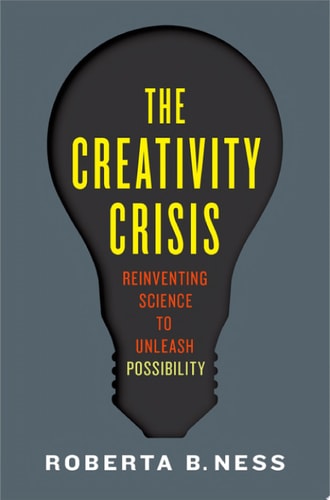
The Creativity Crisis
0
0
As an Amazon Associate and affiliate partner, Menrva Books earns from qualifying purchases. Learn more
Author Description
Every Day We Hear About Some Fascinating New Discovery. Yet Anemic Progress Toward Addressing The Greatest Risks To Humankind -- Clean Energy, Emerging Infections, And Cancer -- Warns Us That Science May Not Be Meeting Its Potential. Indeed, There Is Evidence That Advances Are Slowing. Science Is Costly And Can Hurt People; Thus It Must Be Pursued With Caution. Yet, Excessive Caution Stifles The Very Thing That Powers Inventiveness: Creation. In Her Boldest Book Yet, Roberta Ness Argues That The System Of Funding Agencies, Universities, And Industries Designed To Promote Innovation Has Come To Impede It. The Creativity Crisis Strips Away The Scientific Enterprise's Veil Of Mystique To Reveal The Gritty Underbelly Of University Research. America's Economic Belt-tightening Discourages Long-term, Risky Investments In Revolutionary Advances And Elevates Short-term Projects With Assured Outcomes. The Pursuit Of Basic Research Insights, With The Greatest Power To Transform But Little Ability To Enrich, Is Being Abandoned. The Social Nature Of Academia Today Also Contributes To The Descent Of Revolutionary Discovery. In Academia, Which Tends To Be Insular, Hierarchical, And Tradition-bound, Research Ideas Are Owned And The Owners Gain Enormous Clout To Decide What Is Accepted. Communalism Is Antithetical To Idea Ownership. Thus Science Has Not Embraced The Web-based Democratic Sharing Of Ideas Called Crowdsourcing, One Of The Greatest Tools For Creativity And Social Change In Our Age. A Final Battleground Between Creation And Caution Is Within The Sphere Of Ethics. Scientists Are Typically Altruistic But Sometimes Have All-too-human Inclinations Toward Avarice And Conceit. The Most Original Thinkers Are Most Likely To Flout Convention. This Tendency Can Pull Them Across The Lines Of Acceptable Behavior. Caution Is A Necessary Check On The Destructive Potential Of Amoral Creation. Yet, When Every Individual And Institution Is Considered A Priori To Be A Threat, Adventuresom
Menrva's Summary
THE THESIS
Does the current institutional structure of modern science actively suppress the very innovation it was designed to foster? Roberta B. Ness, a physician and researcher, examines the systemic barriers within universities, funding agencies, and private industry that prioritize risk-averse, short-term projects over transformative scientific discovery. By analyzing the intersection of economic pressures, academic hierarchy, and ethical constraints, she argues that the scientific enterprise has become trapped in a cycle of caution that stifles creative potential.
THE SCOPE MAP
What You Will Find
- Analysis of how current funding models discourage long-term, high-risk research in favor of incremental gains.
- Examination of academic culture, including hierarchy and the proprietary nature of research ideas.
- Discussion of the role of crowdsourcing and digital collaboration as untapped tools for scientific advancement.
- Evaluation of the tension between ethical oversight and the necessity of unconventional thinking in scientific breakthroughs.
THE AUTHORITY PERSPECTIVE
Experts and readers often note the provocative nature of Ness's critique regarding the institutional inertia of modern academia. The text is frequently cited for its candid assessment of how economic and social pressures within research environments impact the pace of discovery.
Page Count:
248
Publication Date:
2014-01-01
Publisher:
Oxford University Press
ISBN-10:
0199375399
ISBN-13:
9780199375394
Non-Fiction
Science
Sociology
Academic Research
Education
Innovation
Community Tags
Similar Books