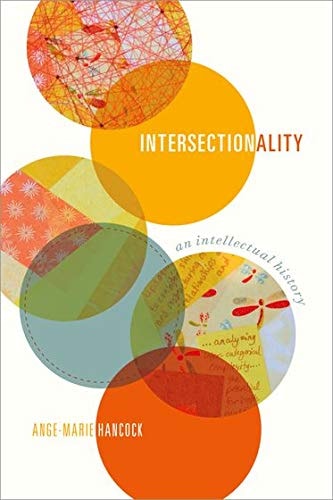
Intersectionality: An Intellectual History
0
0
As an Amazon Associate and affiliate partner, Menrva Books earns from qualifying purchases. Learn more
Author Description
Intersectionality theory has emerged over the past thirty years as a way to think about the avenues by which inequalities (most often dealing with, but not limited to, race, gender, class and sexuality) are produced. Rather than seeing such categories as signaling distinct identities that can be adopted, imposed or rejected, intersectionality theory considers the logic by which each of these categories is socially constructed as well as how they operate within the diffusion of power relations. In other words, social and political power are conferred through categories of identity, and these identities bear vastly material effects. Rather than look at inequalities as a relationship between those at the center and those on the margins, intersectionality maps the relative ways in which identity politics create power.Though intersectionality theory has emerged as a highly influential school of thought in ethnic studies, gender studies, law, political science, sociology and psychology, no scholarship to date exists on the evolution of the theory. In the absence of a comprehensive intellectual history of the theory, it is often discussed in vague, ahistorical terms. And while scholars have called for greater specificity and attention to the historical foundations of intersectionality theory, their idea of the history to be included is generally limited to the particular currents in the United States. This book seeks to remedy the vagueness and murkiness attributed to intersectionality by attending to the historical, geographical, and cross-disciplinary myopia afflicting current intersectionality scholarship. This comprehensive intellectual history is an agenda-setting work for the theory.
Menrva's Summary
THE THESIS
This book investigates the intellectual origins and evolution of intersectionality theory to resolve the ambiguity and historical myopia currently surrounding the concept. Ange-Marie Hancock, a scholar in political science and gender studies, utilizes a rigorous analytical framework to trace how intersectionality has developed across various academic disciplines. By examining the historical and geographical foundations of the theory, the author provides a structured account of how identity categories function within power relations and material social structures.
THE SCOPE MAP
What You Will Find
- A comprehensive intellectual history of intersectionality theory over the past thirty years.
- An analysis of how power relations are produced through socially constructed identity categories.
- A critique of the current disciplinary and geographical limitations in intersectionality scholarship.
- A methodological framework for understanding the material effects of identity politics.
THE AUTHORITY PERSPECTIVE
Scholars and students of political theory recognize this work as a foundational text that brings necessary clarity to a complex and often misunderstood field. Readers frequently note the academic density of the prose, which serves as a rigorous guide for those seeking to understand the historical development of intersectionality.
Page Count:
274
Publication Date:
2016-01-11
Publisher:
Oxford University Press
ISBN-10:
0199370362
ISBN-13:
9780199370368
History
Philosophy
Gender Studies
Group Identity
Ethnic Studies
Sociology
Discrimination
Community Tags
Similar Books