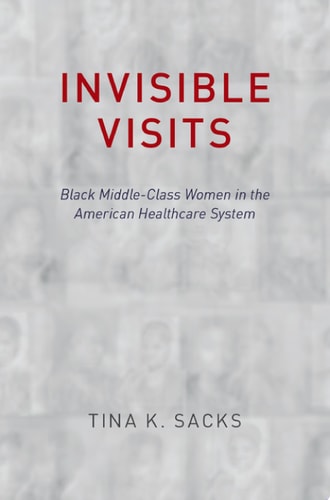
Invisible Visits: Black Middle-Class Women in the American Healthcare System
0
0
As an Amazon Associate and affiliate partner, Menrva Books earns from qualifying purchases. Learn more
Author Description
Although the United States spends almost one-fifth of all its resources funding healthcare, the American system continues to be dogged by persistent inequities in the treatment of racial and ethnic minorities and women. Invisible Visits analyzes how middle-class Black women navigate the complexities of dealing with doctors in this environment. It challenges the idea that race and gender discrimination-particularly in healthcare settings-is a thing of the past, and questions the persistent myth that discrimination only affects poor racial minorities. In so doing, the book expands our understanding of how Black middle-class women are treated when they go to the doctor, why they continue to face inequities in securing proper medical care, and what strategies they use to fight for the best treatment (as well as the consequential toll on their health). Drawing from original research, the author shines a light on how women perceive the persistently negative stereotypes that follow them into the exam room, and proceeds to illustrate why simply providing more cultural-competency or anti-bias training to doctors will not be enough to overcome the problem. For Americans to truly address these challenges, the deeply embedded discrimination in our prized institutions-including those in the healthcare sector-must be acknowledged.
Menrva's Summary
THE THESIS
This book investigates how middle-class Black women experience and navigate racial and gender discrimination within the American healthcare system. Tina K. Sacks, a scholar in social welfare, utilizes original qualitative research to challenge the assumption that socioeconomic status shields Black women from medical bias. She argues that institutionalized discrimination persists regardless of class, necessitating a structural reevaluation of healthcare delivery rather than relying solely on individual provider training.
THE SCOPE MAP
What You Will Find
- Qualitative analysis of patient-provider interactions
- Documentation of the psychological and physical toll of medical bias
- Examination of patient advocacy strategies used by middle-class Black women
- Critique of current cultural-competency training models
Scope Limits
- Does not provide a comprehensive history of the entire American medical system
- Does not focus on the experiences of low-income or uninsured populations
THE AUTHORITY PERSPECTIVE
Experts in sociology and public health identify this work as a critical contribution to the study of health disparities among marginalized groups. Readers frequently note the clarity of the author's arguments and the effectiveness of the qualitative data in illustrating systemic issues.
Page Count:
160
Publication Date:
2018-01-01
Publisher:
Oxford University Press
ISBN-10:
0190840226
ISBN-13:
9780190840228
Gender Studies
Race & Ethnicity
Sociology
Introduction to Social WorkWelfare
Ethnic Studies
African Americans
Public Health
Healthcare
Community Tags
Similar Books