The Four Freedoms
0
0
As an Amazon Associate and affiliate partner, Menrva Books earns from qualifying purchases. Learn more
Author Description
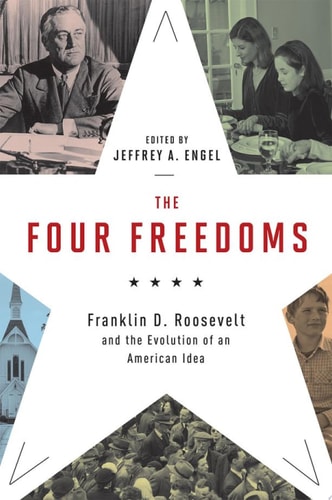
The Specter Of Global War Loomed Large In President Franklin Roosevelt's Mind As He Prepared To Present His 1941 State Of The Union Address. He Believed The United States Had A Role To Play In The Battle Against Nazi And Fascist Aggression Already Underway In Europe, Yet His Rallying Cry To The Nation Was About More Than Just National Security Or Why Americans Should Care About A Fight Still Far Overseas. He Instead Identified How Americans Defined Themselves As A People, With Words That Resonated And Defined The Parameters Of American Politics And Foreign Policy For Generations. Roosevelt Framed America's Role In The Conflict, And Ultimately Its Role In Forging The Post-war World To Come, As A Fight For Freedom. Four Freedoms, To Be Exact: Freedom Of Speech, Freedom From Want, Freedom Of Religion, And Freedom From Fear. In This New Look At One Of The Most Influential Presidential Addresses Ever Delivered, Historian Jeffrey A. Engel Joins Together With Five Other Leading Scholars To Explore How Each Of Roosevelt's Freedoms Evolved Over Time, For Americans And For The Wider World. They Examine The Ways In Which The Word Freedom Has Been Used By Americans And Others, Across Decades And The Political Spectrum. However, They Are Careful To Note That Acceptance Of The Freedoms Has Been Far From Universal--even Within The United States. Freedom From Want, Especially, Has Provoked Clashes Between Those In Favor Of An Expanded Welfare State And Proponents Of Limited Government From The 1940s To The Present Day. In This Sweeping Look At The Way American Conceptions Of Freedom Have Evolved Over Time,the Four Freedoms Brings To Light A New Portrait Of Who Americans Were In 1941 And Who They Have Become Today In Their Own Eyes-and In The Eyes Of The Entire World.
Menrva's Summary
THE THESIS
This book investigates how Franklin D. Roosevelt's 1941 'Four Freedoms' address established a foundational framework for American political identity and foreign policy that continues to evolve in the modern era. Historian Jeffrey A. Engel, alongside a team of five prominent scholars, analyzes the historical trajectory of these four specific liberties—speech, religion, want, and fear—to determine how they have been interpreted and contested across the American political spectrum. By examining the gap between Roosevelt's original intent and the subsequent application of these ideals, the authors provide a critical assessment of how American values have shaped both domestic policy and global engagement since the Second World War.
THE SCOPE MAP
What You Will Find
- A detailed historical analysis of the 1941 State of the Union address and its immediate geopolitical context.
- An examination of the ideological evolution of 'Freedom from Want' and its role in debates over the American welfare state.
- Comparative studies on how the concept of freedom has been utilized by various political factions from the 1940s to the present.
- A multi-disciplinary assessment of how these four pillars have influenced the perception of American identity on the global stage.
THE AUTHORITY PERSPECTIVE
Experts and historians recognize this work as a rigorous examination of the intersection between presidential rhetoric and long-term policy development. Readers frequently note the academic depth of the analysis, which effectively bridges the gap between historical narrative and contemporary political discourse.
Page Count:
320
Publication Date:
2015-01-01
Publisher:
Oxford University Press
ISBN-10:
0199376220
ISBN-13:
9780199376223
History
Government
International relations
American History
Community Tags
Similar Books