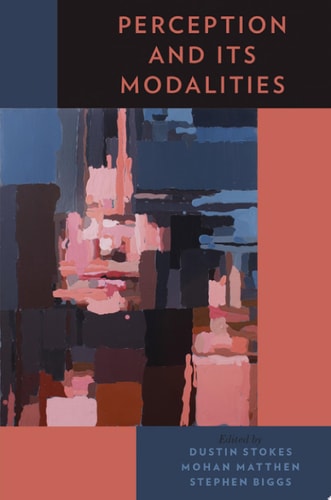
Perception and Its Modalities
0
0
As an Amazon Associate and affiliate partner, Menrva Books earns from qualifying purchases. Learn more
Author Description
This volume is about the many ways we perceive. In nineteen new essays, philosophers and cognitive scientists explore the nature of the individual senses, how and what they tell us about the world, and how they interrelate. They consider how the senses extract perceptual content from receptoral information and what kinds of objects we perceive and whether multiple senses ever perceive a single event. Questions pertaining to how many senses we have, what makes one sense distinct from another, and whether and why distinguishing senses may be useful feature prominently. Contributors examine the extent to which the senses act in concert, rather than as discrete modalities, and whether this influence is epistemically pernicious, neutral, or beneficial.Many of the essays engage with the idea that it is unduly restrictive to think of perception as a collation of contents provided by individual sense modalities. Rather, contributors contend that to understand perception properly we need to build into our accounts the idea that the senses work together. In doing so, they aim to develop better paradigms for understanding the senses and thereby to move toward a better understanding of perception.
Menrva's Summary
THE THESIS
This volume investigates the fundamental nature of human perception by examining the distinct roles and collaborative interactions of the individual senses. The editor, Stephanos Bibas, compiles nineteen original essays from philosophers and cognitive scientists to challenge traditional models of sensory processing. The text argues against viewing perception as a mere collation of discrete inputs, proposing instead that sensory modalities function as an integrated system to construct our understanding of the world.
THE SCOPE MAP
What You Will Find
- Analysis of the distinction between receptoral information and perceptual content.
- Philosophical inquiry into the criteria used to define and differentiate individual senses.
- Examination of multisensory integration and whether multiple senses can perceive a single event.
- Discussion on the epistemic implications of sensory cooperation versus sensory independence.
THE AUTHORITY PERSPECTIVE
Experts identify this collection as a significant contribution to contemporary philosophy of perception and cognitive science. Readers frequently note the academic density of the prose, which is best suited for those with a background in epistemology or sensory research.
Page Count:
512
Publication Date:
2014-01-01
Publisher:
Oxford University Press
ISBN-10:
0199381615
ISBN-13:
9780199381616
Philosophy
Science
Psychology
Epistemology
Mind & Body
Community Tags
Similar Books