Cornering the Market
0
0
As an Amazon Associate and affiliate partner, Menrva Books earns from qualifying purchases. Learn more
Author Description
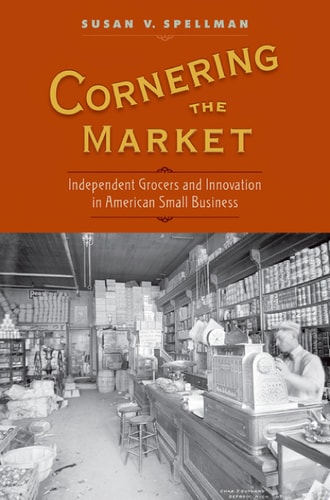
In Popular Stereotypes, Local Grocers Were Avuncular Men Who Spent Their Days In Pickle-barrel Conversations And Checkers Games; They Were Backward Small-town Merchants Resistant To Modernizing Impulses. Cornering The Market Challenges These Conventions To Demonstrate That Nineteenth- And Early-twentieth-century Grocers Were Important But Unsung Innovators Of Business Models And Retail Technologies That Fostered The Rise Of Contemporary Retailing. Small Grocery Owners Revolutionized Business Practices From The Bottom By Becoming The First Retailers To Own And Operate Cash Registers, Develop New Distribution Paths, And Engage In Transforming The Grocery Trade From Local Enterprises To A Nationwide Industry. Drawing On Storekeepers' Diaries, Business Ledgers And Documents, And The Letters Of Merchants, Wholesalers, Traveling Men, And Consumers, Susan V. Spellman Details The Remarkable Achievements Of American Small Businessmen, And Their Major Contributions To The Making Of Modern Enterprise In The United States. The Development Of Mass Production, Distribution, And Marketing, The Growth Of Regional And National Markets, And The Introduction Of New Organizational And Business Methods Fundamentally Changed The Structures Of American Capitalism. Within The Walls Of Their Stores, Proprietors Confronted These Changes By Crafting Solutions Centered On Notions Of Efficiency, Scale, And Price Control. Without Abandoning Local Ties, They Turned Social Concepts Of Community Into Commercial Profitability. It Was A Powerful Combination That Businesses From Chain Stores To Walmart Continue To Exploit Today.
Menrva's Summary
THE THESIS
This book investigates how small-town grocers in the nineteenth and early twentieth centuries acted as primary innovators in the development of modern American retail and business practices. Susan V. Spellman, a historian specializing in American business, utilizes a wealth of primary source material—including store ledgers, personal diaries, and merchant correspondence—to challenge the stereotype of the grocer as a passive, backward merchant. She argues that these small business owners were actually the architects of modern commercial structures, pioneering the use of new technologies and distribution methods that paved the way for contemporary corporate giants.
THE SCOPE MAP
What You Will Find
- Analysis of the transition from local grocery trade to a nationwide industry.
- Examination of early retail technology adoption, specifically the implementation of cash registers.
- Use of primary source evidence including business ledgers, merchant letters, and consumer correspondence.
- Exploration of how small business owners balanced community social ties with the demands of efficiency and price control.
THE AUTHORITY PERSPECTIVE
Experts recognize this work as a significant contribution to the history of American capitalism, providing a nuanced look at the micro-level origins of large-scale retail. Readers frequently note that the text offers a detailed, evidence-based corrective to popular misconceptions about the role of the small-town merchant in economic history.
Page Count:
336
Publication Date:
2016-01-01
Publisher:
Oxford University Press
ISBN-10:
0199384282
ISBN-13:
9780199384280
History
Business
Economics
American History
Commerce
Retail
Community Tags
Similar Books