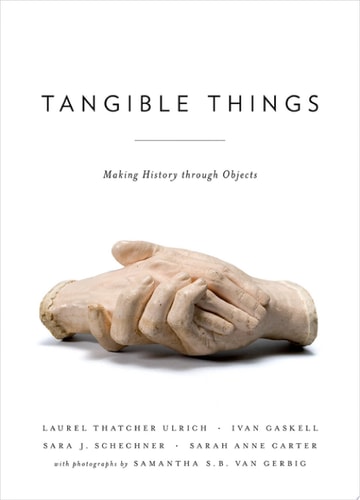
Tangible Things: Making History through Objects
0
0
As an Amazon Associate and affiliate partner, Menrva Books earns from qualifying purchases. Learn more
Author Description
In a world obsessed with the virtual, tangible things are once again making history. Tangible Things invites readers to look closely at the things around them, ordinary things like the food on their plate and extraordinary things like the transit of planets across the sky. It argues that almost any material thing, when examined closely, can be a link between present and past.The authors of this book pulled an astonishing array of materials out of storage--from a pencil manufactured by Henry David Thoreau to a bracelet made from iridescent beetles--in a wide range of Harvard University collections to mount an innovative exhibition alongside a new general education course. The exhibition challenged the rigid distinctions between history, anthropology, science, and the arts. It showed that object-centered inquiry inevitably leads to a questioning of categories within and beyond history.Tangible Things is both an introduction to the range and scope of Harvard's remarkable collections and an invitation to reassess collections of all sorts, including those that reside in the bottom drawers or attics of people's houses. It interrogates the nineteenth-century categories that still divide art museums from science museums and historical collections from anthropological displays and that assume history is made only from written documents. Although it builds on a larger discussion among specialists, it makes its arguments through case studies, hoping to simultaneously entertain and inspire. The twenty case studies take us from the Galapagos Islands to India and from a third-century Egyptian papyrus fragment to a board game based on the twentieth-century comic strip "Dagwood and Blondie." A companion website catalogs the more than two hundred objects in the original exhibition and suggests ways in which the principles outlined in the book might change the way people understand the tangible things that surround them.
Menrva's Summary
THE THESIS
This book investigates how the examination of material objects can bridge the gap between the present and the past, challenging the traditional academic boundaries that separate history, science, and the arts. The authors, a collaborative group of scholars and curators associated with Harvard University, utilize a diverse array of artifacts from university collections to argue that object-centered inquiry is a vital tool for historical analysis. By moving beyond the reliance on written documents, they propose a framework that encourages readers to interrogate the physical world as a repository of historical evidence and cultural meaning.
THE SCOPE MAP
What You Will Find
- Twenty distinct case studies ranging from ancient Egyptian papyrus to modern pop culture artifacts.
- A critical analysis of nineteenth-century classification systems that divide museums into rigid disciplinary categories.
- Methodologies for conducting object-centered inquiry in both professional collections and personal spaces.
- Evidence drawn from Harvard University's extensive and varied material collections.
THE AUTHORITY PERSPECTIVE
Experts and educators frequently cite this work as a foundational text for students of material culture and museum studies. Readers often note the accessible yet intellectually rigorous nature of the case studies, which successfully demonstrate the practical application of interdisciplinary research.
Page Count:
280
Publication Date:
2015-01-01
Publisher:
Oxford University Press
ISBN-10:
0199382301
ISBN-13:
9780199382309
History
Science
Museum Studies
Art History
Anthropology
Special Topics
Civilization
World Civilization
Community Tags
Similar Books
Reader Comments
Share Your Thoughts
No comments yet. Be the first to share your thoughts!