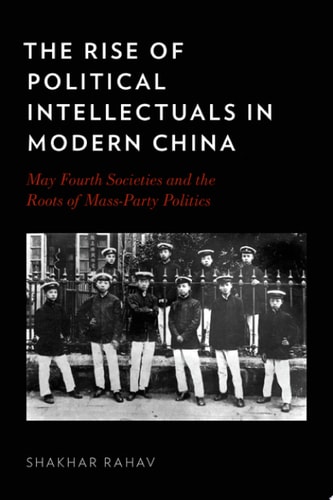
Rise of Political Intellectuals in Modern China: May Fourth Societies and the Roots of Mass-Party Politics
0
0
As an Amazon Associate and affiliate partner, Menrva Books earns from qualifying purchases. Learn more
Author Description
The May Fourth Movement (1915-1923) Is Widely Considered A Watershed In The History Of Modern China. This Book Is A Social History Of Cultural And Political Radicals Based In China's Most Important Hinterland City At This Pivotal Time, Wuhan. Current Narratives Of May Fourth Focus On The Ideological Development Of Intellectuals In The Seaboard Metropoles Of Beijing And Shanghai. And Although Scholars Have Pointed To The Importance Of The Many Cultural-political Societies Of The Period, They Have Largely Neglected To Examine These Associations, Seeing Them Only As Seedbeds Of Chinese Communism And Its Leaders, Like Mao Zedong. This Book, By Contrast, Portrays The Everyday Life Of May Fourth Activists In Wuhan In Cultural-political Societies Founded By Local Teacher And Journalist Yun Daiying (1895-1931). The Book Examines The Ways By Which Radical Politics Developed In Hinterland Urban Centers, From There Into A Nation Wide Movement, Which Ultimately Provided The Basis For The Emergence Of Mass Political Parties, Namely The Nationalist Party (guomindang) And The Chinese Communist Party (ccp). The Book's Focus On Organizations, Everyday Life, And Social Networks Provides A Novel Interpretation Of Where Mechanisms Of Historical Change Are Located. The Book Also Highlights The Importance Of Print Culture In The Provinces. It Demonstrates How Provincial Print-culture Combined With Small, Local Organizations To Create A Political Movement. The Vantage Point Of Wuhan Demonstrates That May Fourth Radicalism Developed In A Dialogue Between The Coastal Metropoles Of Beijing And Shanghai And Hinterland Urban Centers. The Book Therefore Charts The Way In Which Seeds Of Political Change Grew From Individuals, Through Local Organizations Into A Nation-wide Movement, And Finally Into Mass-party Politics And Subsequently Revolution. The Book Thus Connects Everyday Experiences Of Activists With The Cultural-political Ferment Which Gave Rise To Both The Chinese Communist Party And The Nationalist Party.
Menrva's Summary
THE THESIS
This book investigates how the May Fourth Movement transitioned from localized intellectual societies in China's hinterland into the foundation for national mass-party politics. Author Shakhar Rahav, a specialist in modern Chinese history, utilizes archival research and social history methodologies to shift the focus away from coastal metropoles like Beijing and Shanghai. By examining the specific case of Wuhan and the networks established by Yun Daiying, the text argues that radical political change emerged from the intersection of provincial print culture and small-scale social organizations.
THE SCOPE MAP
What You Will Find
- A detailed social history of the May Fourth Movement (1915-1923) centered on the city of Wuhan.
- An analysis of the role of cultural-political societies and local print culture in fostering radicalism.
- Examination of the organizational mechanisms that linked individual activists to the Nationalist Party and the Chinese Communist Party.
- A framework for understanding how hinterland urban centers engaged in a dialogue with coastal intellectual hubs to shape national political movements.
THE AUTHORITY PERSPECTIVE
Scholars recognize this work as a significant contribution to the study of Chinese political development by highlighting the overlooked importance of provincial networks. The text is noted for its rigorous archival approach and its ability to bridge the gap between micro-level social history and macro-level political transformation.
Page Count:
176
Publication Date:
2015-01-01
Publisher:
Oxford University Press, Incorporated
ISBN-10:
0199386099
ISBN-13:
9780199386093
History
Radicalism
China
Politics & Government
Asian Studies
Radicals
Social History
Intellectuals china
Community Tags
Similar Books







Reader Comments
Share Your Thoughts
No comments yet. Be the first to share your thoughts!