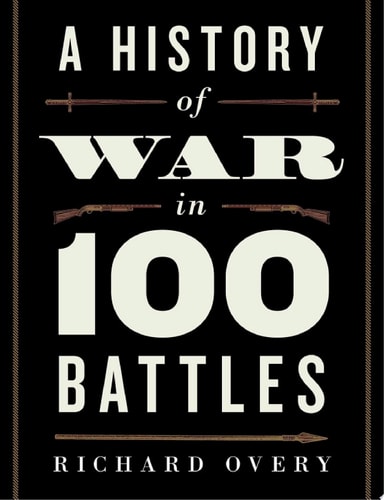
A History of War in 100 Battles
0
0
As an Amazon Associate and affiliate partner, Menrva Books earns from qualifying purchases. Learn more
Author Description
Their very names--Gettysburg, Waterloo, Stalingrad--evoke images of great triumph and equally great suffering, moments when history seemed to hang in the balance. Considered in relation to each other, such battles--and others of less immediate renown--offer insight into the changing nature of armed combat, advances in technology, shifts in strategy and thought, as well as altered geopolitical landscapes. The most significant military engagements in history define the very nature of war. In his newest book, Richard Overy plumbs over 3,000 years of history, from the Fall of Troy in 1200 BC to the Fall of Baghdad in 2003, to locate the 100 battles that he believes the most momentous. Arranged by themes such as leadership, innovation, deception, and courage under fire, Overy presents engaging essays on each battle that together provide a rich picture of how combat has changed through the ages, as well as highlighting what has remained consistent despite advances in technology. The battles covered here offer a wide geographic sweep, from ancient Greece to China, Constantinople to Moscow, North to South America, providing a picture of the dominant empires across time and context for comparison between various military cultures. From familiar engagements like Thermopylae (480 BC), Verdun (1916), and the Tet Offensive (1968) to lesser-studied battles such as Zama (202 BC), Arsuf (1191), and Navarino Bay (1827), Overy presents the key actors, choices, and contingencies, focusing on those details--sometimes overlooked--that decided the battle. The American victory at the Battle of Midway, for example, was determined by only ten bombs. It was, as Wellington said of Waterloo, a "near run thing." Rather than focusing on the question of victory or defeat, Overy examines what an engagement can tell us on a larger level about the history of warfare itself. New weapons and tactics can have a sudden impact on the outcome of a battle--but so too can leadership, or the effects of a cle
Menrva's Summary
THE THESIS
How do specific military engagements across three millennia illustrate the evolution and enduring constants of human warfare? Richard Overy, a distinguished historian, utilizes a thematic framework to analyze 100 pivotal battles ranging from 1200 BC to 2003. By examining the intersection of leadership, technological innovation, and strategic decision-making, Overy argues that these conflicts serve as essential markers for understanding the shifting geopolitical and tactical landscape of global history.
THE SCOPE MAP
What You Will Find
- A chronological and thematic survey of 100 significant military engagements spanning from the Fall of Troy to the Fall of Baghdad.
- Analysis of recurring factors in combat, including the role of leadership, deception, and courage under fire.
- Comparative studies of diverse military cultures across ancient Greece, China, the Americas, and Europe.
- Examination of how specific tactical contingencies and technological shifts influenced the outcomes of major historical turning points.
THE AUTHORITY PERSPECTIVE
Scholars and readers frequently commend this work for its accessible yet rigorous approach to military history. Experts note that the thematic organization allows for a nuanced understanding of warfare that transcends simple chronological listing.
Page Count:
385
Publication Date:
2014-01-01
Publisher:
Oxford University Press
ISBN-10:
0199390738
ISBN-13:
9780199390731
History
Non-Fiction
Kindle eBooks
Warfare
Military History
Subjects
Military
World
Categories
Kindle Store
World War
Battles
Community Tags
Similar Books