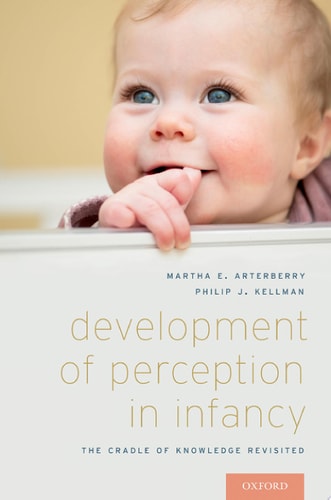
Development Of Perception In Infancy
0
0
As an Amazon Associate and affiliate partner, Menrva Books earns from qualifying purchases. Learn more
Author Description
The Developing Infant Can Accomplish All Important Perceptual Tasks That An Adult Can, Albeit With Less Skill Or Precision. Through Infant Perception Research, Infant Responses To Experiences Enable Researchers To Reveal Perceptual Competence, Test Hypotheses About Processes, And Infer Neural Mechanisms, And Researchers Are Able To Address Age-old Questions About Perception And The Origins Of Knowledge. In Development Of Perception In Infancy: The Cradle Of Knowledge Revisited, Martha E. Arterberry And Philip J. Kellman Study The Methods And Data Of Scientific Research On Infant Perception, Introducing And Analyzing Topics (such As Space, Pattern, Object, And Motion Perception) Through Philosophical, Theoretical, And Historical Contexts. Infant Perception Research Is Placed In A Philosophical Context By Addressing The Abilities With Which Humans Appear To Be Born, Those That Appear To Emerge Due To Experience, And The Interaction Of The Two. The Theoretical Perspective Is Informed By The Ecological Tradition, And From Such A Perspective The Authors Focus On The Information Available For Perception, When It Is Used By The Developing Infant, The Fit Between Infant Capabilities And Environmental Demands, And The Role Of Perceptual Learning. Since The Original Publication Of This Book In 1998 (mit), Arterberry And Kellman Address In Addition The Mechanisms Of Change, Placing The Basic Capacities Of Infants At Different Ages And Exploring What It Is That Infants Do With This Information. Significantly, The Authors Feature The Perceptual Underpinnings Of Social And Cognitive Development, And Consider Two Examples Of Atypical Development - Congenital Cataracts And Autism Spectrum Disorder. Professionals And Students Alike Will Find This Book A Critical Resource To Understanding Perception, Cognitive Development, Social Development, Infancy, And Developmental Cognitive Neuroscience, As Research On The Origins Of Perception Has Changed Forever Our Conceptions Of How Human Me
Menrva's Summary
THE THESIS
This book investigates the origins of human knowledge by examining how infants develop the capacity to perceive their environment. Authors Martha E. Arterberry and Phillip J. Kellman utilize an ecological framework to analyze how infants process information regarding space, motion, and objects. By synthesizing historical, philosophical, and empirical data, the authors argue that perceptual competence is a foundational element of cognitive and social development.
THE SCOPE MAP
What You Will Find
- Analysis of perceptual domains including space, pattern, object, and motion perception.
- Theoretical application of the ecological tradition to infant development.
- Examination of atypical development cases, specifically congenital cataracts and autism spectrum disorder.
- Discussion of the mechanisms of change and the role of perceptual learning in early life.
THE AUTHORITY PERSPECTIVE
Experts recognize this work as a foundational text for students and professionals in developmental cognitive neuroscience. Readers frequently note the academic density of the prose and the authors' rigorous approach to bridging philosophical questions with empirical research findings.
Page Count:
384
Publication Date:
2016-01-01
Publisher:
Oxford University Press
ISBN-10:
0199395640
ISBN-13:
9780199395644
Psychology
Neuroscience
Developmental Psychology
Community Tags
Similar Books