A House in the Sun
0
0
As an Amazon Associate and affiliate partner, Menrva Books earns from qualifying purchases. Learn more
Author Description
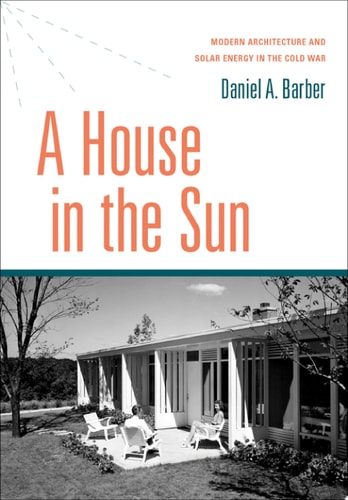
A House In The Sun Describes A Number Of Experiments In Solar House Heating In American Architectural, Engineering, Political, Economic, And Corporate Contexts From The Beginning Of World War Ii Until The Late 1950s. Houses Were Built Across The Midwest, Northeast, And Southwestern United States, And Also Proposed For Sites In India, South Africa, And Morocco. These Experiments Developed In Parallel To Transformations In The Discussion Of Modern Architecture, Relying On New Materials And Design Ideas For Both Energy Efficiency And Claims To Cultural Relevance. Architects Were Among The Myriad Cultural And Scientific Actors To See The Solar House As An Important Designed Element Of The American Future. These Experiments Also Developed As Part Of A Wider Analysis Of The Globe As An Interconnected Geophysical System. Perceived Resource Limitations In The Immediate Postwar Period Led To New Understandings Of The Relationship Between Energy, Technology And Economy. The Solar House - Both As A Charged Object In The Milieu Of Suburban Expansion, And As A Means To Raise The Standard Of Living In Developing Economies - Became An Important Site For Social, Technological, And Design Experimentation. This Led To New Forms Of Expertise In Architecture And Other Professions. Daniel Barber Argues That This Mid-century Interest In Solar Energy Was One Of The First Episodes In Which Resource Limitations Were Seen As An Opportunity For Design To Attain New Relevance For Potential Social And Cultural Transformations. Furthermore, The Solar Discussion Established Both An Intellectual Framework And A Funding Structure For The Articulation Of And Response To Global Environmental Concerns In Subsequent Decades. In Presenting Evidence Of Resource Tensions At The Beginning Of The Cold War, The Book Offers A New Perspective On The Histories Of Architecture, Technology, And Environmentalism, One More Fully Entangled With The Often Competing Dynamics Of Geopolitical And Geophysical Pressures.
Menrva's Summary
THE THESIS
This book investigates how mid-century solar house experiments functioned as critical sites for negotiating the intersection of architectural design, resource scarcity, and geopolitical strategy. Daniel A. Barber, an architectural historian, utilizes archival research and technical case studies to argue that these early solar projects were not merely engineering feats but were central to shaping modern environmental discourse. He demonstrates how architects, engineers, and policymakers leveraged these designs to address postwar economic pressures and global resource limitations, establishing a framework for future environmental policy and design practice.
THE SCOPE MAP
What You Will Find
- Historical analysis of solar house experiments in the United States, India, South Africa, and Morocco from the 1940s through the 1950s.
- Examination of the interplay between suburban expansion, corporate interests, and emerging energy-efficient technologies.
- Evidence drawn from architectural archives, engineering reports, and postwar economic policy documents.
- A critical framework connecting the history of modern architecture to the development of global environmentalism.
THE AUTHORITY PERSPECTIVE
Scholars in architectural history and environmental studies recognize this work as a significant contribution to understanding the origins of sustainable design. The text is noted for its rigorous synthesis of technical engineering history and broader geopolitical narratives.
Page Count:
320
Publication Date:
2016-01-01
Publisher:
Oxford University Press
ISBN-10:
0199394024
ISBN-13:
9780199394029
Architecture
History
Energy
urban planning
Technology
Community Tags
Similar Books