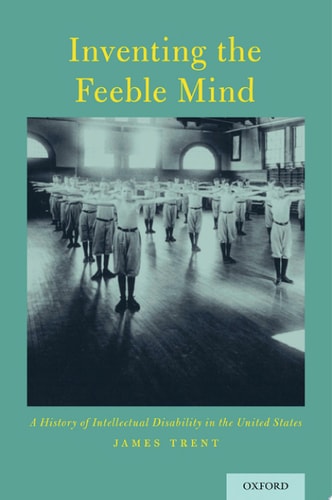
Inventing the Feeble Mind
0
0
As an Amazon Associate and affiliate partner, Menrva Books earns from qualifying purchases. Learn more
Author Description
Pity, Disgust, Fear, Cure, And Prevention--all Are Words That Americans Have Used To Make Sense Of What Today We Call Intellectual Disability. Inventing The Feeble Mind Explores The History Of This Disability From Its Several Identifications Over The Past 200 Years: Idiocy, Imbecility, Feeblemindedness, Mental Defect, Mental Deficiency, Mental Retardation, And Most Recently Intellectual Disability. Using Institutional Records, Private Correspondence, Personal Memories, And Rare Photographs, James Trent Argues That The Economic Vulnerability Of Intellectually Disabled People (and Often Their Families), More Than The Claims Made For Their Intellectual And Social Limitations, Has Shaped Meaning, Services, And Policies In United States History.
Menrva's Summary
THE THESIS
This book investigates how economic vulnerability, rather than perceived intellectual limitations, has historically dictated the treatment and societal categorization of individuals with intellectual disabilities in the United States. James W. Trent Jr., a scholar in the field of disability history, utilizes a robust collection of primary sources to challenge conventional narratives regarding the evolution of mental disability services. By examining the shift from labels like 'idiocy' to 'intellectual disability,' the author argues that policy decisions were frequently driven by the perceived economic burden of these individuals on the state and their families.
THE SCOPE MAP
What You Will Find
- A chronological analysis of terminology shifts including idiocy, imbecility, and feeblemindedness over a 200-year period.
- Examination of institutional records, private correspondence, and personal memoirs to reconstruct the lived experience of the disabled.
- A critical review of American public policy and social service development regarding disability.
- Evidence demonstrating the correlation between economic instability and the institutionalization of disabled populations.
THE AUTHORITY PERSPECTIVE
Historians and sociologists frequently cite this work as a foundational text for understanding the intersection of economic policy and disability rights. Experts highlight the author's meticulous use of archival materials to provide a comprehensive look at how societal attitudes have shaped institutional care.
Page Count:
384
Publication Date:
2016-01-01
Publisher:
Oxford University Press
ISBN-10:
0199396191
ISBN-13:
9780199396191
History
Sociology
Public Policy
American History
Community Tags
Similar Books














