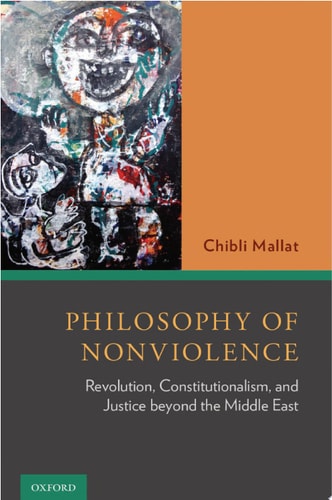
Philosophy of Nonviolence: Revolution, Constitutionalism, and Justice beyond the Middle East
0
0
As an Amazon Associate and affiliate partner, Menrva Books earns from qualifying purchases. Learn more
Author Description
In 2011, the Middle East saw more people peacefully protesting long entrenched dictatorships than at any time in its history. The dictators of Tunisia, Egypt, and Yemen were deposed in a matter of weeks by nonviolent marches. Imprecisely described as 'the Arab Spring', the revolution has been convulsing the whole region ever since. Beyond an uneven course in different countries, Philosophy of Nonviolence examines how 2011 may have ushered in a fundamental break in world history. The break, the book argues, is animated by nonviolence as the new spirit of the philosophy of history.Philosophy of Nonviolence maps out a system articulating nonviolence in the revolution, the rule of constitutional law it yearns for, and the demand for accountability that inspired the revolution in the first place. Part One--Revolution, provides modern context to the generational revolt, probes the depth of Middle Eastern-Islamic humanism, and addresses the paradox posed by nonviolence to the 'perpetual peace' ideal. Part Two--Constitutionalism, explores the reconfiguration of legal norms and power structures, mechanisms of institutional change and constitution-making processes in pursuit of the nonviolent anima. Part Three--Justice, covers the broadening concept of dictatorship as crime against humanity, an essential part of the philosophy of nonviolence. It follows its frustrated emergence in the French revolution, its development in the Middle East since 1860 through the trials of Arab dictators, the pyramid of accountability post-dictatorship, and the scope of foreign intervention in nonviolent revolutions. Throughout the text, Professor Mallat maintains thoroughly abstract and philosophical arguments, while substantiating those arguments in historical context enriched by a close participation in the ongoing Middle East revolution.
Menrva's Summary
THE THESIS
This work investigates whether the nonviolent uprisings of 2011 represent a fundamental shift in world history, proposing nonviolence as a new guiding spirit for the philosophy of history. Chibli Mallat, a legal scholar and active participant in regional political movements, utilizes a framework that bridges political theory with historical analysis. He argues that the events of the Arab Spring necessitate a re-evaluation of how revolution, constitutional law, and justice intersect in the modern era.
THE SCOPE MAP
What You Will Find
- A theoretical framework linking nonviolent revolution to constitutionalism and institutional accountability.
- Historical analysis of Middle Eastern-Islamic humanism and its role in modern political movements.
- Examination of the legal evolution of 'crimes against humanity' from the French Revolution to contemporary trials.
- A systematic study of the mechanics of constitution-making and the paradoxes of the 'perpetual peace' ideal.
THE AUTHORITY PERSPECTIVE
Scholars and political analysts recognize this text as a dense, interdisciplinary contribution to the study of modern revolutionary movements. Readers frequently note the high level of philosophical abstraction balanced against the author's direct experience in the region's political transitions.
Page Count:
408
Publication Date:
2015-02-05
Publisher:
Oxford University Press
ISBN-10:
0199394202
ISBN-13:
9780199394203
Philosophy
History
Government Resistance To
Law
Social change
Nonviolence
Professional Career & Trade
Middle East
Human rights
Community Tags
Similar Books