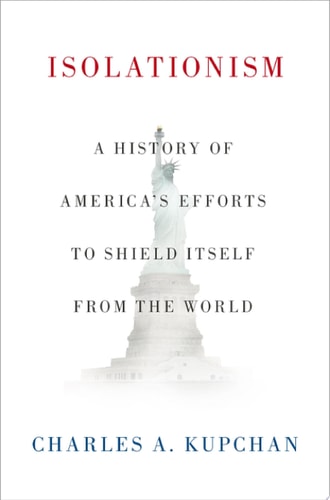
Isolationism
0
0
As an Amazon Associate and affiliate partner, Menrva Books earns from qualifying purchases. Learn more
Author Description
The First Book To Tell The Full Story Of American Isolationism, From The Founding Era Through The Trump Presidency. In His Farewell Address Of 1796, President George Washington Admonished The Young Nation To Steer Clear Of Permanent Alliances With Any Portion Of The Foreign World. Isolationism Thereafter Became One Of The Most Influential Political Trends In American History. From The Founding Era Until The Japanese Attack On Pearl Harbor, The United States Shunned Strategic Commitments Abroad, Making Only Brief Detours During The Spanish-american War And World War I. Amid World War Ii And The Cold War, Americans Abandoned Isolationism; They Tried To Run The World Rather Than Run Away From It. But Isolationism Is Making A Comeback As Americans Tire Of Foreign Entanglement. In This Definitive And Magisterial Analysis-the First Book To Tell The Fascinating Story Of Isolationism Across The Arc Of American History-charles Kupchan Explores The Enduring Connection Between The Isolationist Impulse And The American Experience. He Also Refurbishes Isolationism's Reputation, Arguing That It Constituted Dangerous Delusion During The 1930s, But Afforded The Nation Clear Strategic Advantages During Its Ascent. Kupchan Traces Isolationism's Staying Power To The Ideology Of American Exceptionalism. Strategic Detachment From The Outside World Was To Protect The Nation's Unique Experiment In Liberty, Which America Would Then Share With Others Through The Power Of Example. Since 1941, The United States Has Taken A Much More Interventionist Approach To Changing The World. But It Has Overreached, Prompting Americans To Rediscover The Allure Of Nonentanglement And An America First Foreign Policy. The United States Is Hardly Destined To Return To Isolationism, Yet A Strategic Pullback Is Inevitable. Americans Now Need To Find The Middle Ground Between Doing Too Much And Doing Too Little.
Menrva's Summary
THE THESIS
This book investigates the historical trajectory of American isolationism, questioning how a nation founded on the principle of avoiding foreign entanglements evolved into a global interventionist power and why the impulse for strategic detachment persists today. Charles A. Kupchan, a senior fellow at the Council on Foreign Relations, utilizes a comprehensive historical framework to analyze the tension between American exceptionalism and the practical requirements of global statecraft. He argues that while isolationism served the nation well during its early ascent, the modern era requires a recalibrated middle ground between overextension and total withdrawal.
THE SCOPE MAP
What You Will Find
- A chronological analysis of American foreign policy from the 1796 Farewell Address through the Trump presidency.
- An examination of the ideological link between American exceptionalism and the desire for strategic nonentanglement.
- A critical reassessment of the strategic advantages and dangers associated with isolationist policies during the 1930s.
- A policy-oriented framework for navigating the future of American engagement in a multipolar world.
THE AUTHORITY PERSPECTIVE
Experts and political analysts frequently highlight this work as a foundational text for understanding the cyclical nature of American foreign policy. Readers note the clarity of Kupchan's historical synthesis and the balanced approach he takes toward the resurgence of non-interventionist sentiment in contemporary politics.
Page Count:
446
Publication Date:
2020-01-01
Publisher:
Oxford University Press
ISBN-10:
0199393249
ISBN-13:
9780199393244
History
International relations
American History
Foreign Policy
Community Tags
Similar Books