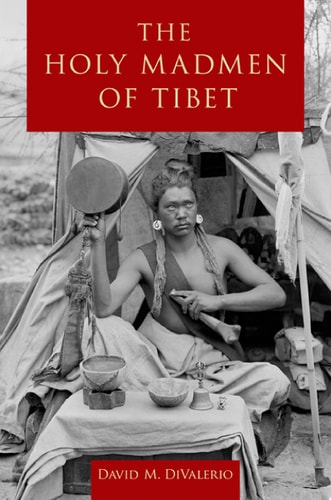
Holy Madmen of Tibet
0
0
As an Amazon Associate and affiliate partner, Menrva Books earns from qualifying purchases. Learn more
Author Description
Throughout the past millennium, certain Tibetan Buddhist yogins have taken on profoundly norm-overturning modes of dress and behavior, including draping themselves in human remains, consuming filth, provoking others to violence, and even performing sacrilege. They became known far and wide as madmen (smyon pa, pronounced nyönpa), achieving a degree of saintliness in the process. This book offers the first comprehensive study of Tibet's holy madmen drawing on their biographies and writings, as well as tantric commentaries, later histories, oral traditions, and more. Much of the Holy Madmen of Tibet is dedicated to examining the lives and legacies of the three most famous holy madmen who were all of the Kagyü sect: the Madman of Tsang (author of the Life of Milarepa), the Madman of Ü, and Drukpa Künlé, madman of the Drukpa Kagyü. Each born in the 1450s, they rose to prominence during a period of civil war and of great shifts in Tibet's religious culture. By focusing on literature written by and about the holy madmen and on the yogins' relationships with their public, this book offers in-depth looks at the narrative and social processes out of which sainthood arises, and at the role biographical literature can play in the formation of sectarian identities. By showing how understandings of the madmen have changed over time, this study allows for new insights into current notions of crazy wisdom. In the end, the holy madmen are seen as self-aware and purposeful individuals who were anything but insane.
Menrva's Summary
THE THESIS
This book investigates the historical and religious phenomenon of the 'holy madmen' (nyönpa) in Tibetan Buddhism, questioning how norm-defying behavior became a recognized path to sainthood. David M. DiValerio, a scholar of Tibetan religious history, utilizes a diverse array of primary sources including biographies, tantric commentaries, and oral traditions to construct a rigorous academic framework. He argues that these figures were not clinically insane but were instead self-aware practitioners whose unconventional actions served specific social and religious functions within the Kagyü sect during a period of intense civil and cultural upheaval.
THE SCOPE MAP
What You Will Find
- A detailed examination of the lives and legacies of three prominent 15th-century figures: the Madman of Tsang, the Madman of Ü, and Drukpa Künlé.
- An analysis of the narrative and social processes that facilitate the construction of sainthood within religious communities.
- A study of the role of biographical literature in the formation and maintenance of sectarian identities in Tibet.
- An exploration of the evolution of 'crazy wisdom' as a concept from the 15th century to contemporary interpretations.
THE AUTHORITY PERSPECTIVE
Scholars and students of Tibetan Buddhism recognize this work as a foundational study that demystifies the complex intersection of madness and holiness. Readers frequently note the academic density of the prose, which provides a thorough and well-documented analysis of primary Tibetan texts.
Page Count:
464
Publication Date:
2015-01-01
Publisher:
Oxford University Press, Incorporated
ISBN-10:
019939122X
ISBN-13:
9780199391226
Biography
History
Religion
Tibet
Buddhism
Tibet China
Community Tags
Similar Books