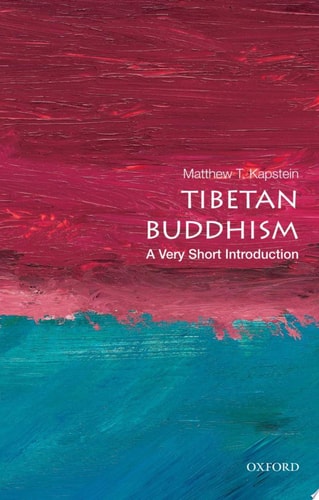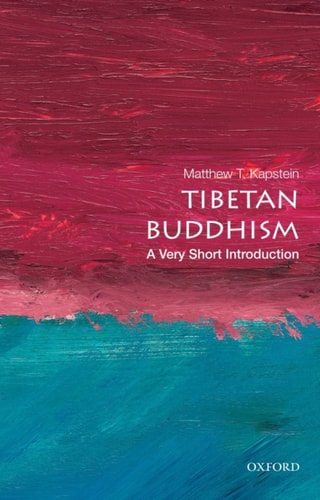
Tibetan Buddhism: A Very Short Introduction
0
0
As an Amazon Associate and affiliate partner, Menrva Books earns from qualifying purchases. Learn more
Author Description
The Tibetan Buddhist tradition has known over thirteen centuries of continuous development. During that time, it has spread among the neighboring peoples - the Mongol, Himalayan, and Siberian peoples, Manchus and Chinese. At its height is has been practiced in regions as far west as the Volga river and to the east in Beijing. Its capacity for creative adaptation is demonstrated by its recent growth in Europe and America. At the same time, it is at the center of political contestation in ethnically Tibetan regions of China, while its best known exponent, the Dalai Lama, has become one of the most admired religious leaders in the world today. But what does this religion teach? Just what is the position of the Dalai Lama, and how will his succession be assured? Is it true that Tibetan Buddhism in entirely suppressed in China? Scholar Matthew Kapstein offers a brief account responding to these questions and more in this Very Short Introduction, in terms that are accessible to students, general readers, journalists, and others who are curious to learn the most essential features of Tibetan Buddhist history, teachings, and practice.
Menrva's Summary
THE THESIS
What are the foundational doctrines, historical developments, and contemporary political realities of the Tibetan Buddhist tradition? Matthew T. Kapstein, a scholar of Tibetan studies, synthesizes thirteen centuries of religious evolution to provide a concise overview of the tradition. He examines the expansion of the faith across Central and East Asia, its adaptation in Western contexts, and its current status within the geopolitical landscape of modern China. The text serves as a structured primer for those seeking to understand the core tenets and the role of figures like the Dalai Lama.
THE SCOPE MAP
What You Will Find
- Historical overview of the tradition's development over thirteen centuries
- Analysis of the geographical spread among Mongol, Himalayan, and Siberian populations
- Examination of the political contestation surrounding Tibetan Buddhism in China
- Discussion of the role and succession of the Dalai Lama
- Exploration of core teachings and contemporary practice
THE AUTHORITY PERSPECTIVE
Experts and educators frequently cite this volume as a balanced, accessible entry point for students and general readers interested in religious studies. The text is noted for its ability to distill complex theological and historical information into a concise, readable format without sacrificing academic rigor.
Page Count:
150
Publication Date:
2013-01-01
Publisher:
Oxford University Press
ISBN-10:
0199911142
ISBN-13:
9780199911141
Religion
History
Philosophy
Non-Fiction
Buddhism
Tibet China