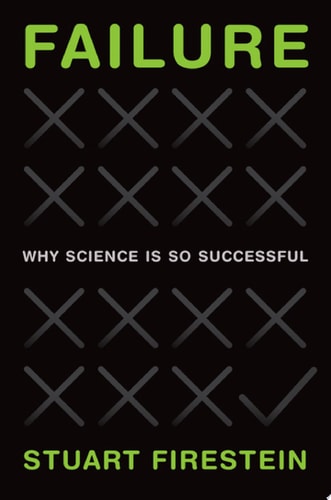
Failure: Why Science Is So Successful
0
0
As an Amazon Associate and affiliate partner, Menrva Books earns from qualifying purchases. Learn more
Author Description
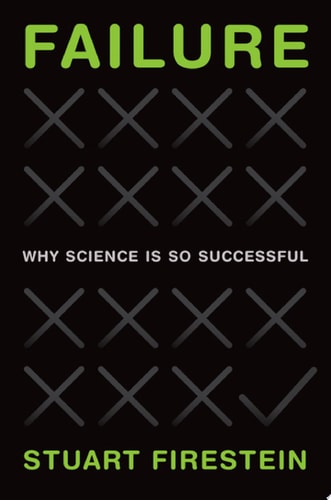
The general public has a glorified view of the pursuit of scientific research. However, the idealized perception of science as a rule-based, methodical system for accumulating facts could not be further from the truth. Modern science involves the idiosyncratic, often bumbling search for understanding in uncharted territories, full of wrong turns, false findings, and the occasional remarkable success.In his sequel to Ignorance (Oxford University Press, 2012), Stuart Firestein shows us that the scientific enterprise is riddled with mistakes and errors - and that this is a good thing! Failure: Why Science Is So Successful delves into the origins of scientific research as a process that relies upon trial and error, one which inevitably results in a hefty dose of failure. In fact, scientists throughout history have relied on failure to guide their research, viewing mistakes as a necessary part of the process. Citing both historical and contemporary examples, Firestein strips away the distorted view of science as infallible to provide the public with a rare, inside glimpse of the messy realities of the scientific process.An insider's view of how science is actually carried out, this book will delight anyone with an interest in science, from aspiring scientists to curious general readers. Accessible and entertaining, Failure illuminates the greatest and most productive adventure of human history, with all the missteps along the way.
Menrva's Summary
THE THESIS
This book investigates the fundamental role that failure and error play in the advancement of scientific discovery, challenging the public perception of science as a linear, infallible accumulation of facts. Stuart Firestein, a professor of neuroscience at Columbia University, utilizes his extensive academic background to argue that the scientific process is inherently messy and reliant on trial and error. By examining the history of research and the nature of experimentation, he posits that mistakes are not merely obstacles but are essential components that guide scientists toward genuine understanding.
THE SCOPE MAP
What You Will Find
- Historical analysis of scientific breakthroughs achieved through trial and error
- A framework for understanding science as an iterative, non-linear process
- Case studies of famous scientific missteps that led to productive discoveries
- An examination of the cultural and educational misconceptions regarding scientific methodology
THE AUTHORITY PERSPECTIVE
Experts and readers frequently note that this text serves as a vital counter-narrative to the sanitized version of science presented in textbooks. The prose is widely praised for its accessibility, making complex philosophical concepts regarding the scientific method understandable for a general audience.
Page Count:
304
Publication Date:
2015-10-01
Publisher:
Oxford University Press
ISBN-10:
019939010X
ISBN-13:
9780199390106
Science
Methodology
Discoveries in science
Science
Nonfiction
Earth Sciences