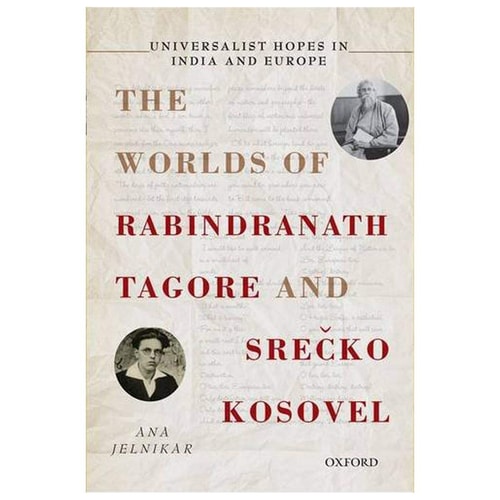
Universalist Hopes in India and Europe: The Worlds of Rabindranath Tagore and Srečko Kosovel
0
0
As an Amazon Associate and affiliate partner, Menrva Books earns from qualifying purchases. Learn more
Author Description
The book explores the often unexpected links between India and East-Central Europe in the early decades of the twentieth century through the writings of Slovenia's leading avant-garde poet, Srecko Kosovel, and India's best-known writer, Rabindranath Tagore. This is the first in-depth comparative study of the two contemporaries grappling with the challenges of European imperialisms and western modernity from their respective backgrounds. Kosovel strongly identified with Tagore in the post-WWI years, when parts of Slovene-populated territory came under Italy. The two writers, despite their different backgrounds, are seen to share a similar set of preoccupations: both rejected nationalism in favor of a broader, universalist perspective. Despite their differences, Tagore and Kosovel are seen to be kindred spirits. The contours of an expanding internationalist stage of the 1920s united the two writers in their world view. This book is also a reminder of responses from within Europe that have largely been overlooked in the dominant postcolonial and cultural studies perspectives.
Menrva's Summary
THE THESIS
This study investigates the intellectual intersections between Rabindranath Tagore and Srečko Kosovel to determine how two disparate figures navigated the pressures of imperialism and modernity in the early twentieth century. Ana Jelnikar, a scholar specializing in comparative literature and cultural history, utilizes archival research and textual analysis to examine how these writers rejected narrow nationalism. By positioning Kosovel’s avant-garde response to Italian occupation alongside Tagore’s global philosophy, the author argues that both men shared a commitment to universalist ideals that transcended their specific geopolitical constraints.
THE SCOPE MAP
What You Will Find
- Comparative analysis of early twentieth-century Indian and Slovene literary responses to imperialism.
- Examination of the influence of post-WWI geopolitical shifts on avant-garde poetry and philosophical prose.
- Critical synthesis of Tagore’s internationalist vision and Kosovel’s regional identity.
- Evaluation of overlooked European perspectives within the broader framework of postcolonial studies.
THE AUTHORITY PERSPECTIVE
Scholars identify this work as a significant contribution to comparative postcolonial studies for its focus on under-represented European voices. The text is noted for its academic rigor and its ability to bridge the gap between South Asian and East-Central European literary traditions.
Page Count:
384
Publication Date:
2016-01-01
Publisher:
Oxford University Press
ISBN-10:
0199460906
ISBN-13:
9780199460908
History
Biography
Kindle Store
Literary Criticism
Criticism & Theory
Kindle eBooks
Comparative
Categories
Community Tags
Similar Books