Nationwide Response Issues After an Improvised Nuclear Device Attack
0
0
As an Amazon Associate and affiliate partner, Menrva Books earns from qualifying purchases. Learn more
Author Description
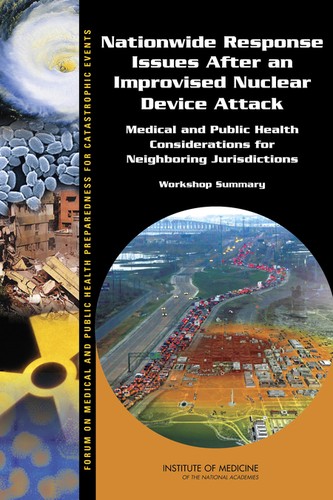
Our nation faces the distinct possibility of a catastrophic terrorist attack using an improvised nuclear device (IND), according to international and U.S. intelligence. Detonation of an IND in a major U.S. city would result in tens of thousands to hundreds of thousands of victims and would overwhelm public health, emergency response, and health care systems, not to mention creating unprecedented social and economic challenges. While preparing for an IND may seem futile at first glance, thousands of lives can be saved by informed planning and decision making prior to and following an attack. In 2009, the Institute of Medicine published the proceedings of a workshop assessing the health and medical preparedness for responding to an IND detonation. Since that time, multiple federal and other publications have added layers of detail to this conceptual framework, resulting in a significant body of literature and guidance. However, there has been only limited planning effort at the local level as much of the federal guidance has not been translated into action for states, cities and counties. According to an informal survey of community preparedness by the National Association of City and County Health Officials (NACCHO), planning for a radiation incident ranked lowest in priority among other hazards by 2,800 local health departments. The focus of Nationwide Response Issues After an Improvised Nuclear Device Attack: Medical and Public Health Considerations for Neighboring Jurisdictions: Workshop Summary is on key response requirements faced by public health and health care systems in response to an IND detonation, especially those planning needs of outlying state and local jurisdictions from the detonation site. The specific meeting objectives were as follows: Understand the differences between types of radiation incidents and implications of an IND attack on outlying communities; Highlight current planning efforts at the federal, state, and local level as well as challen
Menrva's Summary
THE THESIS
The detonation of an improvised nuclear device (IND) in a major U.S. city would overwhelm existing public health, emergency response, and healthcare systems, creating unprecedented social and economic challenges. While preparing for such an event may seem daunting, informed planning and decision-making prior to and following an attack can save thousands of lives. This book focuses on the critical response requirements for public health and healthcare systems, particularly for jurisdictions neighboring the detonation site. It aims to translate federal guidance into actionable plans for states, cities, and counties, addressing the lowest priority given to radiation incident planning among local health departments.
THE SCOPE MAP
- Distinctions between various types of radiation incidents and their specific implications for outlying communities following an IND attack.
- An overview of current planning efforts at federal, state, and local levels.
- Identification of key response requirements and planning needs for public health and healthcare systems in neighboring jurisdictions.
- Analysis of the challenges in translating federal guidance into actionable local plans.
- Discussion of the low priority currently assigned to radiation incident planning by local health departments.
THE AUTHORITY PERSPECTIVE
This workshop summary addresses critical response requirements for public health and healthcare systems following an improvised nuclear device detonation, with a particular focus on neighboring jurisdictions. It highlights the gap between federal guidance and local-level planning efforts, noting that radiation incident planning ranks lowest among hazards for many local health departments. The document aims to provide a framework for understanding the unique challenges faced by communities outside the immediate blast zone and to encourage more robust preparedness at the state and local levels. The content is derived from discussions and assessments conducted during a workshop convened by the Forum on Medical and Public Health Preparedness for Catastrophic Events.
Page Count:
0
Publication Date:
2014-01-01
ISBN-10:
0309286042
ISBN-13:
9780309286046
Health
Science & Technology
Non-Fiction
Emergency Preparedness
Public Health
National security
Community Tags
Similar Books