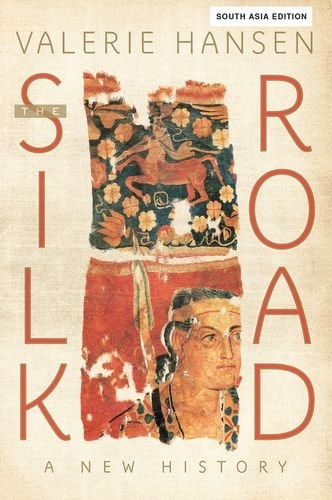
The Silk Road
0
0
As an Amazon Associate and affiliate partner, Menrva Books earns from qualifying purchases. Learn more
Author Description
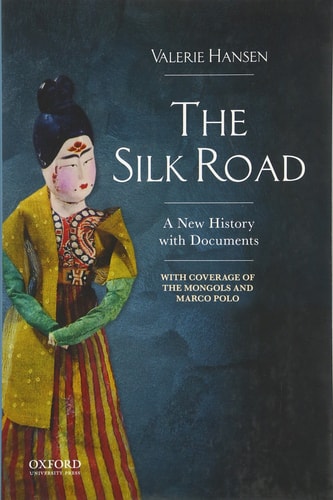
In The Silk Road, Valerie Hansen describes the archeological finds that revolutionize our understanding of these trade routes. Hansen explores seven oases along the road, from Xi'an to Samarkand, where merchants, envoys, pilgrims, and travelers mixed in cosmopolitan communities, tolerant of religions from Buddhism to Zoroastrianism. There was no single, continuous road, but a chain of markets that traded between east and west. China's main partners were the peoples of modern-day Iran, whose tombs in China reveal much about their Zoroastrian beliefs. Silk was not the most important good on the road; paper had a bigger impact in Europe, while metals, spices, and glass were just as important as silk. Perhaps most significant of all was the road's transmission of ideas, technologies, and artistic motifs.
Menrva's Summary
THE THESIS
Valerie Hansen investigates the historical reality of the Silk Road by challenging the myth of a single, continuous trade route. Drawing on extensive archaeological evidence and primary source documents, Hansen, a professor of history at Yale University, argues that the Silk Road functioned as a decentralized network of local markets and oases that facilitated the exchange of goods, technologies, and religious ideas rather than a unified highway.
THE SCOPE MAP
What You Will Find
- Archaeological analysis of seven specific oasis cities from Xi'an to Samarkand.
- Examination of the role of non-silk commodities like paper, metals, spices, and glass.
- Evidence of religious pluralism and the transmission of Zoroastrian and Buddhist beliefs.
- Re-evaluation of the cultural interactions between China and the peoples of modern-day Iran.
THE AUTHORITY PERSPECTIVE
Historians and scholars frequently cite this work as a corrective to popular misconceptions regarding the nature of ancient trans-Eurasian trade. Readers often note the accessible yet rigorous approach Hansen takes in synthesizing complex archaeological findings for a general audience.
Page Count:
0
Publication Date:
2017-01-01
Publisher:
Oxford University Press
ISBN-10:
0199471754
ISBN-13:
9780199471751
History
Archaeology
Central Asia
Trade
Community Tags
Other Editions(3)
Similar Books