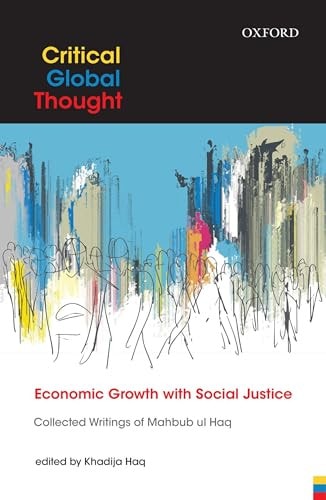
Economic Growth with Social Justice: Collected Writings of Mahbub ul Haq
0
0
As an Amazon Associate and affiliate partner, Menrva Books earns from qualifying purchases. Learn more
Author Description
The book traces the evolution of Mahbub ul Haq's thinking on development, and highlights its impact on global, regional, and national policy debates. It situates the origins and significance of Haq's development philosophy focusing on social justice. The introduction to the volume explains Haq's reasons for moving away from 'growth-only' philosophy to 'growth-with-distribution'. The four parts of the book show Haq's contributions to the larger international development debate from the 1960s to the 1990s, including on issues ranging from global governance, sustainable development, trade and debt, to food security, gender equality, and nuclear disarmament. Each part is introduced to place Haq's work in the context of that period, explain its significance in shaping development theory, policy, and practice, and highlight its ongoing influence and relevance to today's issues and debates. The book analyses Mahbub ul Haq's ultimate goal of making people the centre of all development policies, programmes and actions.
Menrva's Summary
THE THESIS
This volume investigates the evolution of Mahbub ul Haq’s development philosophy, specifically his transition from a growth-centric economic model to one centered on social justice and human welfare. Khadija Haq, drawing on extensive archival material and historical context, documents the intellectual trajectory of one of the 20th century's most influential development economists. The work provides a structured analysis of how Haq’s theories challenged prevailing international policy paradigms between the 1960s and 1990s, ultimately advocating for a framework where human development serves as the primary metric of progress.
THE SCOPE MAP
What You Will Find
- A comprehensive collection of Mahbub ul Haq’s seminal writings spanning four decades of economic thought.
- Analysis of the shift from traditional GDP-focused growth models to human-centric development strategies.
- Historical context regarding global governance, trade, debt, and nuclear disarmament policy debates.
- Examination of thematic pillars including gender equality, food security, and sustainable development.
THE AUTHORITY PERSPECTIVE
Experts recognize this collection as a foundational resource for understanding the intellectual history of the Human Development Index and modern development economics. Readers frequently note the academic density of the prose, which serves as a vital reference for students and policymakers interested in the intersection of economic growth and social equity.
Page Count:
324
Publication Date:
2018-01-15
Publisher:
Oxford University Press
ISBN-10:
0199474680
ISBN-13:
9780199474684
History
Economics
Social justice
Community Tags
Similar Books