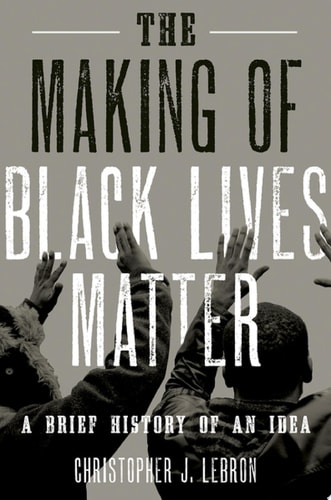
The Making of Black Lives Matter: A Brief History of an Idea
0
0
As an Amazon Associate and affiliate partner, Menrva Books earns from qualifying purchases. Learn more
Author Description
Started in the wake of George Zimmerman's 2013 acquittal in the death of Trayvon Martin, the #BlackLivesMatter movement has become a powerful and uncompromising campaign demanding redress for the brutal and unjustified treatment of black bodies by law enforcement in the United States. The movement is only a few years old, but as Christopher J. Lebron argues in this book, the sentiment behind it is not; the plea and demand that "Black Lives Matter" comes out of a much older and richer tradition arguing for the equal dignity -- and not just equal rights -- of black people. The Making of Black Lives Matter presents a condensed and accessible intellectual history that traces the genesis of the ideas that have built into the #BlackLivesMatter movement. Drawing on the work of revolutionary black public intellectuals, including Frederick Douglass, Ida B. Wells, Langston Hughes, Zora Neal Hurston, Anna Julia Cooper, Audre Lorde, James Baldwin, and Martin Luther King Jr., Lebron clarifies what it means to assert that "Black Lives Matter" when faced with contemporary instances of anti-black law enforcement. He also illuminates the crucial difference between the problem signaled by the social media hashtag and how we think that we ought to address the problem. As Lebron states, police body cameras, or even the exhortation for civil rights mean nothing in the absence of equality and dignity. To upset dominant practices of abuse, oppression and disregard, we must reach instead for radical sensibility. Radical sensibility requires that we become cognizant of the history of black thought and activism in order to make sense of the emotions, demands, and arguments of present-day activists and public thinkers. Only in this way can we truly embrace and pursue the idea of racial progress in America.
Menrva's Summary
THE THESIS
This book investigates the intellectual origins of the Black Lives Matter movement by positioning it as a continuation of a long-standing tradition of black thought rather than a modern anomaly. Christopher J. Lebron, a professor of philosophy, utilizes historical analysis and political theory to argue that the movement's core demand for dignity is rooted in the writings of figures like Frederick Douglass and James Baldwin. He contends that contemporary activism must be understood through this historical lens to effectively challenge systemic anti-black violence and pursue genuine racial equality.
THE SCOPE MAP
What You Will Find
- Intellectual history of black activism from the 19th century to the present
- Analysis of the distinction between legal rights and human dignity
- Examination of works by Frederick Douglass, Ida B. Wells, Langston Hughes, and Audre Lorde
- Critique of modern policy-based solutions like police body cameras
Scope Limits
- Does not provide a comprehensive chronological account of every protest event
- Does not focus on legislative lobbying strategies or electoral politics
THE AUTHORITY PERSPECTIVE
Experts and readers frequently note the book's success in providing a philosophical foundation for modern social movements. The text is often cited as a concise, accessible entry point for those seeking to understand the historical depth behind contemporary racial justice discourse.
Page Count:
216
Publication Date:
2017-01-01
Publisher:
Oxford University Press
ISBN-10:
0190601361
ISBN-13:
9780190601362
History
African Americans
Civil Rights
American History
Sociology
Social justice
African American
United States
American Government
Racism
Community Tags
Similar Books