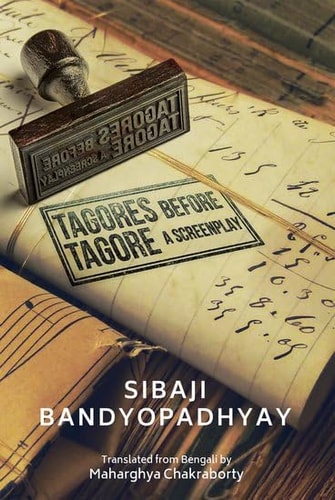
Tagores Before Tagore: A Screenplay
0
0
As an Amazon Associate and affiliate partner, Menrva Books earns from qualifying purchases. Learn more
Author Description
When Dwarakanath Tagore, the entrepreneur hailed as India's first 'bourgeois', died on 1 August 1846, Jorasanko found itself rattled by a series of upheavals. In each of these episodes, the chief player was his son--and Rabindranath Tagore's father--Debendranath Tagore. He was a social reformer who founded the Brahmo Dharma. Yet, despite his deeply spiritual nature, he dabbled in crass materialistic matters. Drawing upon Debendranath's opposing sentiments, Tagores Before Tagore narrates a historical period crucial to the making of indigenous modernity.Scripted at the insistence of the famed filmmaker Rituparno Ghosh, this screenplay, based on true events, chronicles the tumultuous happenings that shook Jorasanko between September 1846 and June 1860, following Dwarakanath's sudden death. Tales of bankruptcy, litigations, deceit, and domestic squabbles abound; and through these tales emerges a rich cultural history of nineteenth-century Bengal.
Menrva's Summary
THE PULSE
Following the sudden death of the wealthy entrepreneur Dwarakanath Tagore in 1846, his son Debendranath Tagore must navigate a chaotic period of financial ruin and domestic upheaval within the Jorasanko household. Debendranath, a man defined by his spiritual devotion to the Brahmo Dharma, finds himself forced to confront the harsh realities of material debt and legal disputes. The screenplay utilizes a historical framework to examine the tension between traditional values and the emerging indigenous modernity of nineteenth-century Bengal. Through a series of dramatic episodes, the narrative explores the internal and external pressures that shaped the legacy of the Tagore family.
INSIDE THE PAGES
- Screenplay format detailing dialogue and scene transitions
- Historical dramatization of the Jorasanko household
- Exploration of the conflict between spiritualism and materialism
- Focus on the transition of power after a family patriarch's death
- Inclusion of legal and financial litigation as narrative drivers
- Portrayal of nineteenth-century Bengali social reform
- Character study of Debendranath Tagore
- Examination of the roots of indigenous modernity
THE COLLECTIVE ECHO
Readers and critics often note the unique nature of this work as a screenplay commissioned by the late filmmaker Rituparno Ghosh. Discussion frequently centers on the meticulous historical research that informs the dramatic tension between the characters. The text is praised for its ability to transform complex biographical events into a compelling narrative structure that highlights the contradictions of the era. Many observers highlight the effectiveness of the dialogue in capturing the domestic squabbles and high-stakes legal battles that defined the Tagore family during this period.
Page Count:
232
Publication Date:
2019-02-01
Publisher:
Oxford University Press
ISBN-10:
0199480370
ISBN-13:
9780199480371
Biography
Drama
Historical
Screenplay
Cultural History
Dramatic works
Community Tags
Similar Books