At Nature's Edge: The Global Present and Long-term History
0
0
As an Amazon Associate and affiliate partner, Menrva Books earns from qualifying purchases. Learn more
Author Description
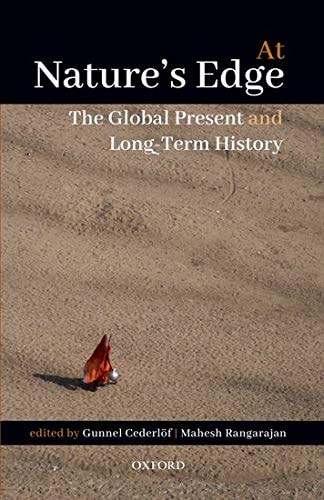
In an epoch when environmental issues make the headlines, this is a work that goes beyond the everyday. Ecologies as diverse as the Himalayas and the Indian Ocean coast, the Negev desert and the former military bases of Vietnam, or the Namib desert and the east African savannah all have in common a long-time human presence and the many ways people have modified nature. With research covering countries from Asia, Africa, and Australia, the authors come together to ask how and why human impacts on nature have grown in scale and pace from a long pre-history.The chapters in this volume illumine specific patterns and responses across time, going beyond an overt centring of the European experience. The tapestry of life and the human reshaping of environments evoke both concern and hope, making it vital to understand when, why, and how we came to this particular turn in the road. Eschewing easy labels and questioning eurocentrism in today's climate vocabulary, this is a volume that will stimulate rethinking among scholars and citizens alike.
Menrva's Summary
THE THESIS
This volume investigates the long-term historical trajectory of human interaction with diverse global environments to understand the origins of contemporary ecological crises. Authors Gunnel Cederlöf and Mahesh Rangarajan utilize a comparative historical framework to analyze how human modification of nature has accelerated across various continents. By moving beyond a Eurocentric perspective, the authors argue that understanding the specific patterns of human impact is necessary to address current environmental challenges.
THE SCOPE MAP
What You Will Find
- Comparative analysis of diverse ecological zones including the Himalayas, the Negev desert, and the east African savannah.
- Historical examination of human environmental modification from pre-history to the modern era.
- Case studies spanning Asia, Africa, and Australia to provide a global perspective.
- Critical evaluation of current climate vocabulary and the historical context of human-nature relationships.
THE AUTHORITY PERSPECTIVE
Scholars and environmental historians recognize this work as a significant contribution to decolonizing environmental history by shifting focus away from European-centric narratives. Readers frequently note the academic rigor of the text, which serves as a valuable resource for those seeking to understand the deep-time roots of modern ecological issues.
Page Count:
325
Publication Date:
2019-03-17
Publisher:
Oxford University Press
ISBN-10:
0199489076
ISBN-13:
9780199489077
History
Science
Geography
Human ecology
Indiana_history
Anthropology
Nature
Community Tags
Similar Books