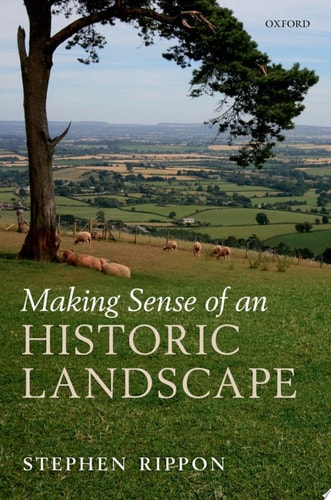
Making Sense of an Historic Landscape
0
0
As an Amazon Associate and affiliate partner, Menrva Books earns from qualifying purchases. Learn more
Author Description
Why is it that in some places around the world communities live in villages, while elsewhere people live in isolated houses scattered across the landscape? How does archaeology analyse the relationship between man and his environment? Making Sense of an Historic Landscape explores why landscapes are so varied and how the landscape archaeologist or historian can understand these differences.Local variation in the character of the countryside provides communities with an important sense of place, and this book suggests that some of these differences can be traced back to prehistory. In his discussion, Rippon makes use of a wide range of sources and techniques, including archaeological material, documentary sources, maps, field- and place-names, and the evidence contained within houses that are still lived in today, to illustrate how local and regional variations in the 'historic landscape' can be understood. Rippon uses the Blackdown Hills in southern England, which marked an important boundary in landscape character from prehistory onwards, as a specific case study to be applied as a model for other landscape areas. Even today the fields, place-names, and styles of domestic architecture are very different either side of the Blackdown Hills, and it is suggested that these differences in landscape character developed because of deep-rooted differences in the nature of society that are found right across southern England. Although focused on the more recent past, the volume also explores the medieval, Roman, and prehistoric periods.
Menrva's Summary
THE THESIS
This book investigates the fundamental reasons for regional variation in human settlement patterns and landscape character throughout history. Stephen Rippon, a specialist in landscape archaeology, synthesizes archaeological data, historical documentation, and architectural analysis to argue that contemporary landscape differences are often rooted in deep-seated social structures dating back to prehistoric times. By examining the interplay between human communities and their physical environment, the author provides a framework for interpreting how local identities are formed and maintained over centuries.
THE SCOPE MAP
What You Will Find
- Analysis of settlement patterns including nucleated villages versus dispersed isolated dwellings.
- Methodologies for integrating archaeological material, cartography, and toponymy in landscape research.
- A detailed case study of the Blackdown Hills in southern England as a model for regional boundary analysis.
- Examination of landscape evolution across prehistoric, Roman, and medieval periods.
THE AUTHORITY PERSPECTIVE
Experts recognize this work as a significant contribution to the field of landscape archaeology, particularly for its interdisciplinary approach to regional character. Readers frequently note the academic rigor of the text, which serves as a valuable resource for historians and archaeologists seeking to understand the long-term development of rural landscapes.
Page Count:
406
Publication Date:
2012-09-07
Publisher:
Oxford University Press
ISBN-10:
0199533784
ISBN-13:
9780199533787
History
Geography
Social History
Archaeology
Great Britain