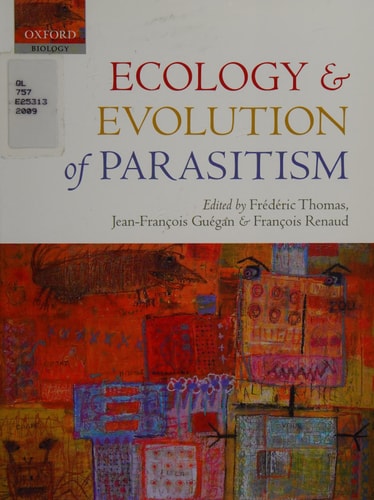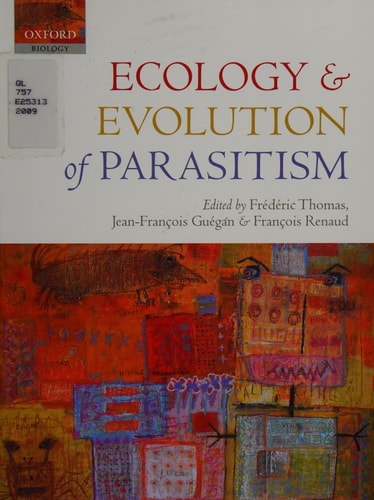
Ecology and Evolution of Parasitism: Hosts to Ecosystems
Author Description
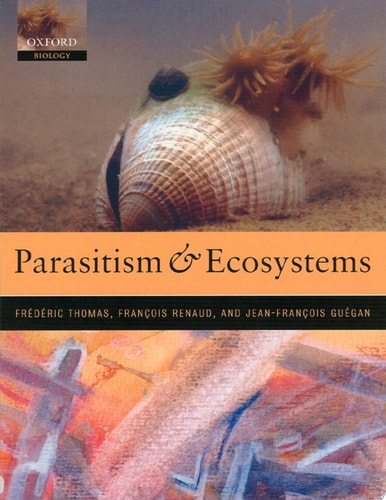
Is it possible to omit parasites when studying free-living organisms? The answer is clearly no! Parasites have evolved independently in numerous animal lineages, and now make up a considerable proportion of the biodiversity of life. Ecologists, epidemiologists, conservationists and evolutionary biologists are increasingly aware of the universal significance of parasites to the study of ecology and evolution where they have become a powerful model system. This book provides a summary of the issues involved as well as an overview of the possibilities offered by this research topic including the practical applications for disease prevention. It uses well-documented case-studies across a range of scales to illustrate the main trends and prospects in this area, outlining areas for future research.Ecology and Evolution of Parasitism is the first book to provide a broad synthesis of both the roles and consequences of pathogens on the ecology and evolution of free living systems. It focuses on hosts rather than the parasites themselves, integrating those aspects related to the ecology and the evolution of free-living species (sexual selection, behaviour, life history traits, regulation of populations etc.). The book includes examples across a range of scales from individuals to populations, communities and ecosystems.
Menrva's Summary
THE THESIS
This book investigates the fundamental role of parasites in shaping the ecology and evolution of free-living organisms and ecosystems. The authors, Frédéric Thomas, François Renaud, and Jean-François Guégan, leverage their expertise in evolutionary biology and epidemiology to argue that parasites are not merely biological curiosities but central drivers of ecological processes. By shifting the focus from the parasite to the host, the text provides a comprehensive framework for understanding how pathogens influence life history traits, population dynamics, and community structure.
THE SCOPE MAP
What You Will Find
- Analysis of host-parasite interactions across biological scales, from individual organisms to entire ecosystems.
- Examination of evolutionary consequences including sexual selection, behavioral changes, and life history adaptations.
- Integration of epidemiological data with ecological theory to address disease prevention and conservation.
- Synthesis of current research trends and identification of critical areas for future scientific inquiry.
THE AUTHORITY PERSPECTIVE
Experts recognize this work as a foundational synthesis that successfully bridges the gap between parasitology and broader ecological studies. Readers frequently note the academic density of the prose, which is well-suited for researchers and advanced students in the biological sciences.
Page Count:
240
Publication Date:
2009-02-15
Publisher:
Oxford University Press
ISBN-10:
0199535337
ISBN-13:
9780199535330
Science
Evolutionary Biology
Biology
Host-parasite relationships
Parasites
Parasitism
Ecology
Parasitology
Community Tags
Similar Books