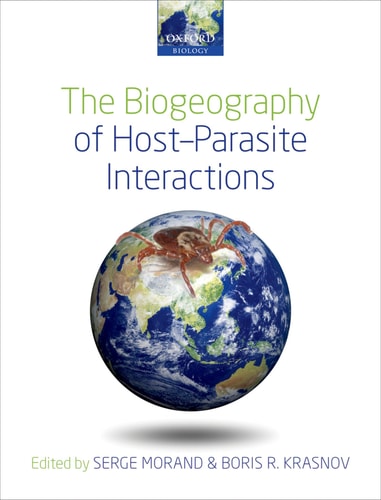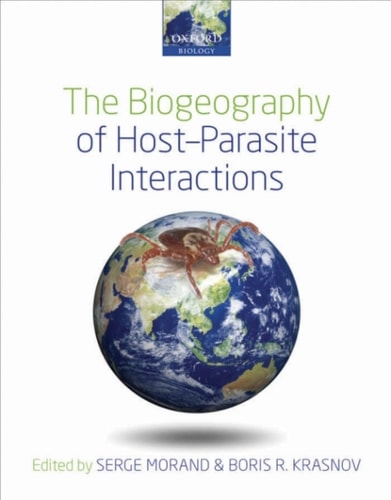
The Biogeography of Host-Parasite Interactions
0
0
As an Amazon Associate and affiliate partner, Menrva Books earns from qualifying purchases. Learn more
Author Description
Biogeography has renewed its concepts and methods following important recent advances in phylogenetics, macroecology, and geographic information systems. In parallel, the evolutionary ecology of host-parasite interactions has attracted the interests of numerous studies dealing with life-history traits evolution, community ecology, and evolutionary epidemiology. The Biogeography of Host-Parasite Interactions is the first book to integrate these two fields, using examples from a variety of host-parasite associations in various regions, and across both ecological and evolutionary timescales. Besides a strong theoretical component, there is a bias towards applications, specifically in the fields of historical biogeography, palaeontology, phylogeography, landscape epidemiology, invasion biology, conservation biology, human evolution, and health ecology. A particular emphasis concerns emerging and re-emerging infectious diseases linked to global changes.
Menrva's Summary
THE THESIS
This book investigates the intersection of biogeography and the evolutionary ecology of host-parasite interactions to explain how spatial and temporal factors influence parasite distribution and evolution. The authors, Boris R. Krasnov and Serge Morand, synthesize recent advancements in phylogenetics, macroecology, and geographic information systems to provide a unified framework. They argue that understanding these interactions across various scales is critical for addressing contemporary challenges in epidemiology and conservation.
THE SCOPE MAP
What You Will Find
- Integration of macroecology and phylogeography within host-parasite systems
- Analysis of life-history trait evolution in parasites
- Application of landscape epidemiology and invasion biology
- Examination of emerging infectious diseases in the context of global environmental change
Scope Limits
- Does not provide an exhaustive catalog of every known host-parasite system
- Focuses primarily on theoretical and macro-scale ecological patterns rather than individual clinical treatment protocols
THE AUTHORITY PERSPECTIVE
Experts recognize this work as a foundational text that bridges the gap between spatial ecology and parasitology. Readers frequently note the academic density of the prose, which is intended for researchers and graduate-level students in the biological sciences.
Page Count:
288
Publication Date:
2010-01-01
Publisher:
OUP Oxford
ISBN-10:
0191576506
ISBN-13:
9780191576508
Science
Linguistics
Parasitology
Evolution
Biology
Evolutionary Biology
Host-parasite relationships
Ecology
Biogeography
English
Earth Sciences
English & College Success