Parasites and the Behavior of Animals
0
0
As an Amazon Associate and affiliate partner, Menrva Books earns from qualifying purchases. Learn more
Author Description
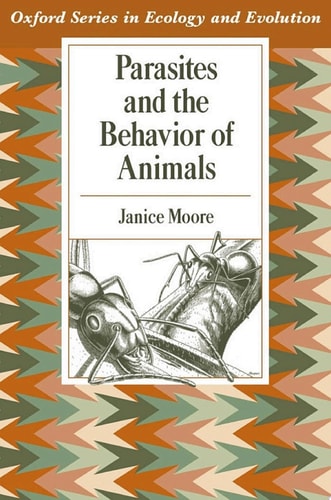
When a parasite invades an ant, does the ant behave like other ants? Maybe not-and if it doesn't, who, if anyone, benefits from the altered behaviors? The parasite? The ant? Parasites and the Behavior of Animals shows that parasite-induced behavioral alterations are more common than we might realize, and it places these alterations in an evolutionary and ecological context. Emphasizing eukaryotic parasites, the book examines the adaptive nature of behavioral changes associated with parasitism, exploring the effects of these changes on parasite transmission, parasite avoidance, and the fitness of both host and parasite. The behavioral changes and their effects are not always straightforward. To the extent that virulence, for instance, is linked to parasite transmission, the evolutionary interests of parasite and host will diverge, and the current winner of the contest to maximize reproductive rates may not be clear, or, for that matter, inevitable. Nonetheless, by affecting susceptibility, host/parasite lifespan and fecundity, and transmission itself, host behavior influences parameters that are basic to our comprehension of how parasites invade host populations, and fundamentally, how parasites evolve. Such an understanding is important for a wide range of scientists, from ecologists and parasitologists to evolutionary, conservation and behavioral biologists: The behavioral alterations that parasites induce can subtly and profoundly affect the distribution and abundance of animals.
Menrva's Summary
THE THESIS
This book investigates the evolutionary and ecological significance of parasite-induced behavioral modifications in animal hosts. Janice Moore, a specialist in behavioral ecology and parasitology, synthesizes research to argue that these alterations are widespread and serve as critical factors in the fitness and transmission dynamics of both host and parasite. The text provides a framework for understanding how such behavioral shifts influence population distribution, abundance, and the long-term evolutionary trajectories of parasitic organisms.
THE SCOPE MAP
What You Will Find
- Analysis of eukaryotic parasite-host interactions
- Evolutionary models regarding virulence and transmission rates
- Examination of host fitness, fecundity, and parasite avoidance strategies
- Integration of ecological data with behavioral observation
Scope Limits
- Primary focus on eukaryotic parasites rather than viral or bacterial pathogens
- Limited discussion on human-specific parasitic behavioral psychology
THE AUTHORITY PERSPECTIVE
Experts recognize this work as a foundational text for understanding the intersection of parasitology and behavioral ecology. Readers frequently note the academic density of the prose, which is tailored for researchers and students in the biological sciences.
Page Count:
432
Publication Date:
2002-01-01
Publisher:
Oxford University Press
ISBN-10:
0190287160
ISBN-13:
9780190287160
Science
Parasitology
Allied Health
Host-parasite relationships
Ecology
Medical
Evolutionary Biology
Zoology
Evolution
Community Tags
Other Editions(3)
Similar Books