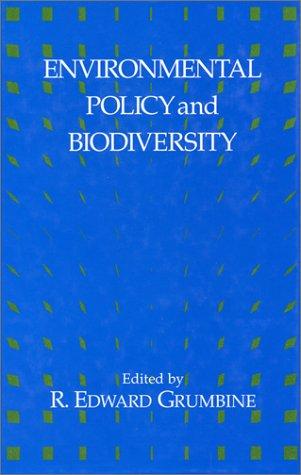
Intellectual Property Rights and Biodiversity Conservation
0
0
As an Amazon Associate and affiliate partner, Menrva Books earns from qualifying purchases. Learn more
Author Description
The urgent need to ensure the conservation of biological diversity is now widely recognised, but the role of an intellectual property rights regime as an instrument for biodiversity conservation is poorly understood and often hotly debated. This volume is a detailed analysis of the economic and scientific rationales of the use of a property rights-based approach to biodiversity conservation. It discusses the justification for, and implementation of, intellectual property rights regimes as incentive systems to encourage conservation. An interdisciplinary approach is used in the book, encompassing fields of study such as evolutionary biology, chemistry, economics and legal studies. The arguments are presented using the case study of the use of medicinal plants in the pharmaceutical industry. The book will be of interest and relevance to a broad spectrum of conservationists from research students to policy makers.
Menrva's Summary
THE THESIS
This volume investigates the complex relationship between intellectual property rights and the urgent need for biodiversity conservation. It provides a detailed analysis of the economic and scientific justifications for employing a property rights-based approach to conservation, exploring how intellectual property regimes can incentivize conservation efforts. The book draws on an interdisciplinary approach, integrating insights from evolutionary biology, chemistry, economics, and legal studies, and uses the pharmaceutical industry's use of medicinal plants as a central case study.
THE SCOPE MAP
- Analysis of the economic and scientific rationales for using intellectual property rights in biodiversity conservation.
- Discussion on the justification and implementation of intellectual property rights regimes as incentive systems.
- Interdisciplinary approach incorporating evolutionary biology, chemistry, economics, and legal studies.
- Case study focusing on the use of medicinal plants in the pharmaceutical industry.
- Relevance for conservationists, research students, and policymakers.
THE AUTHORITY PERSPECTIVE
The book is positioned as a significant contribution to the understanding of intellectual property rights as a tool for biodiversity conservation, addressing a topic often subject to debate. Its interdisciplinary approach, drawing from biology, chemistry, economics, and law, suggests a comprehensive examination of the subject. The use of a specific case study involving medicinal plants and the pharmaceutical industry indicates a practical and applied focus. The intended audience, ranging from students to policymakers, points to its utility as both an academic resource and a guide for practical application in conservation efforts.
Page Count:
271
Publication Date:
1995-01-01
ISBN-10:
0521471125
Economics
Nature
Science
Non-Fiction
Conservation
Intellectual Property
Law
Pharmaceutical Industry
Biodiversity
Community Tags
Similar Books