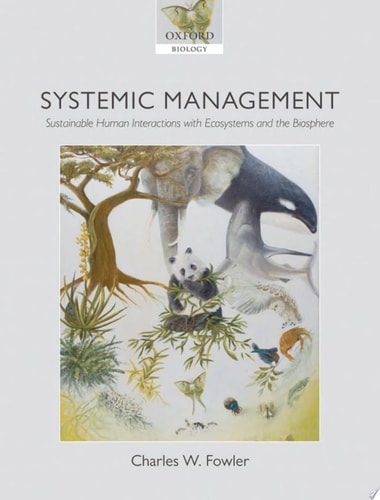
Systemic Management: Sustainable Human Interactions with Ecosystems and the Biosphere
0
0
As an Amazon Associate and affiliate partner, Menrva Books earns from qualifying purchases. Learn more
Author Description
Systemic Management describes a holistic, objective, and universally applicable form of management, providing a framework for addressing environmental challenges such as global warming, emergent diseases, deforestation, overpopulation, the extinction crisis, pollution, over-fishing, and habitat destruction. Its goals are the consistently sustainable relationships between humans and ecosystems, between humans and other species, and between humans and the biosphere. This book presents a convincing argument that these goals, and the means to achieve them, can be inferred from empirical information. It describes how comparisons between humans and other species reveal patterns that can serve to guide management toward true sustainability, i.e. ways that are empirically observed to work in natural systems. This objective approach has rarely been possible in conventional management because sustainability is invariably undermined by conflicting human values.Systemic Management is presented as a specialized process of pattern-based decision-making that avoids the inconsistency, subjectivity and error in current management practice. It clearly demonstrates how mimicking nature's empirical examples of sustainability can circumvent anthropocentric tendencies to overuse/misuse human values in management, and illustrates the science best suited for achieving sustainability through examples of research that address specific management questions.
Menrva's Summary
THE THESIS
This book investigates whether human management of the biosphere can be transformed from a subjective, value-laden practice into an objective, empirical process modeled after natural systems. Charles W. Fowler, a researcher with extensive experience in ecosystem dynamics, argues that current management failures stem from anthropocentric biases. He proposes a framework of systemic management that utilizes empirical data and comparative analysis of natural patterns to establish sustainable relationships between humanity and the biosphere. By shifting focus toward observed biological success, the author provides a methodology for addressing complex environmental crises.
THE SCOPE MAP
What You Will Find
- A comparative analysis of human behavior versus natural species patterns.
- A framework for pattern-based decision-making in environmental management.
- Empirical evidence regarding sustainability in natural ecosystems.
- Strategies for mitigating global challenges such as overpopulation, pollution, and habitat destruction.
THE AUTHORITY PERSPECTIVE
Experts recognize this work as a rigorous attempt to apply systems theory to environmental policy. Readers frequently note the academic density of the prose, which demands a high level of engagement with ecological and management principles.
Page Count:
352
Publication Date:
2009-06-15
Publisher:
Oxford University Press
ISBN-10:
0199540969
ISBN-13:
9780199540969
Science
Nature
Natural Resources
Ecology
Nature
Bering Sea
Management
Sustainability
Community Tags
Similar Books